
Fear Of Missing Out (FOMO) — Definition | runic.tools
Definition
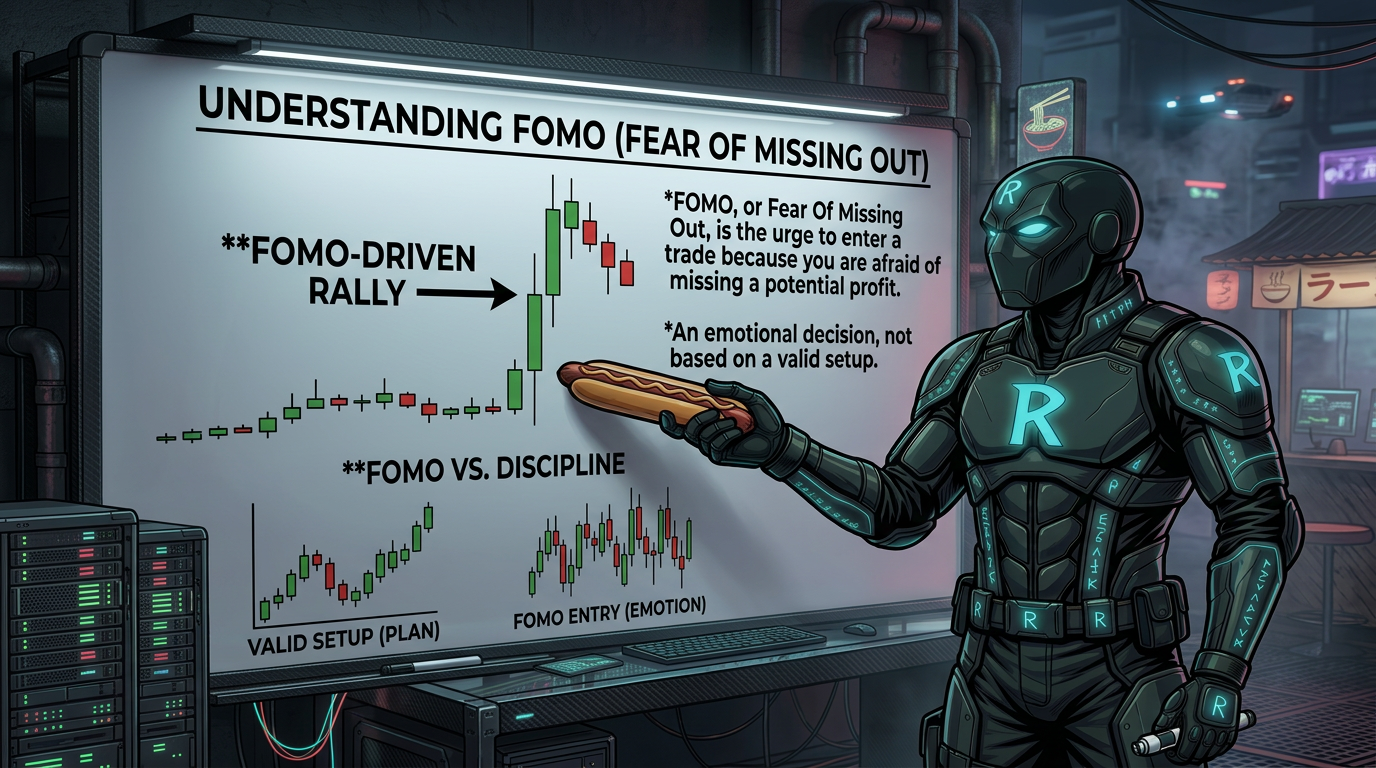
FOMO, or Fear Of Missing Out, is the urge to enter a trade because you are afraid of missing a potential profit — not because your trading plan says the setup is ready. It is driven by emotion, not logic.
Explanation
FOMO happens when a trader imagines all the good things a trade might bring — passing a funded challenge, paying bills, buying something nice — before the market has even given a valid signal. That mental story creates excitement and fear at the same time. The fear is the worry that you will miss out on the outcome you just imagined. Because the fantasy comes first, FOMO is self-created. You are not reacting to the market. You are reacting to a story in your own head. This is why traders take trades too early, chase price, or ignore their rules. The fix is straightforward: stop building expectations before the market gives you a real signal. Top traders focus on process instead of outcome. They ask only one question before entering a trade — does this setup match my plan? If yes, they take it. If no, they pass. They do not attach their emotions to what any single trade might pay out. Over many trades, sticking to a proven edge is what builds consistent profit. FOMO fades when the fantasy fades.
Example
A trader sees price moving fast and jumps in without a valid setup because they fear missing a big move — that impulse is FOMO in action.
Why It Matters
FOMO is one of the most common reasons traders blow accounts and break their own rules. It pushes you to take bad trades at bad times. Learning to recognize and stop FOMO keeps you disciplined, protects your capital, and helps you trade your plan — not your emotions.
Common Misconceptions
Reality: FOMO is caused by expectations you create in your own mind before the market gives a signal. The market's speed is not the problem — your mental story is.
Reality: All traders can feel the pull of FOMO. Top traders manage it by staying process-focused and not attaching emotions to individual trade outcomes.
Reality: Chasing a missed move is one of the most dangerous things a trader can do. There is always another setup. Forcing a trade that is not in your plan costs more than the missed opportunity.
Reality: FOMO is a feedback signal. It tells you that you are holding unrealistic expectations. Recognizing it is actually the first step toward better discipline.
Frequently Asked Questions
What does FOMO mean in trading?
FOMO stands for Fear Of Missing Out. In trading, it means entering a trade because you are afraid of missing a potential profit — even when your plan has not given you a valid signal to enter.
What causes FOMO in trading?
FOMO is caused by creating mental expectations about what a trade might bring you — money, a funded account, paying bills — before the market has actually set up. That imagined outcome triggers the fear of missing it.
How do I stop FOMO when trading?
Write down every benefit you think a trade is going to give you before you enter. Reading that list back forces self-awareness and shows you how much of your thinking is fantasy rather than plan-based. Once you drop the fantasy, the FOMO usually drops with it.
Is FOMO always bad for traders?
FOMO itself is a useful signal. It tells you that you are chasing an outcome you imagined rather than trading your edge. The problem is acting on it. Recognizing FOMO and pausing is actually a sign of growing discipline.
What is the difference between a FOMO trade and a good trade?
A good trade is taken because the setup matches your trading plan. A FOMO trade is taken because you are afraid of missing the outcome you imagined. The entry might look the same on a chart, but the reason behind it is completely different.
Can FOMO cause traders to lose money?
Yes. FOMO pushes traders to enter too early, chase price, or take setups that do not meet their criteria. These low-quality trades often result in losses that could have been avoided by simply waiting for a real signal.
How do the best traders avoid FOMO?
Top traders focus on process, not outcome. They follow a mechanical trading plan and only ask whether a setup matches their edge. They do not attach emotions to what a single trade might pay out, which removes the root cause of FOMO.
Does FOMO only affect beginner traders?
No. Traders at all levels can experience FOMO, especially during fast-moving markets or high-stakes situations like funded account challenges. The difference is that experienced traders recognize it quickly and do not act on it.