
London Session — Definition & How to Trade It | runic.tools
Definition
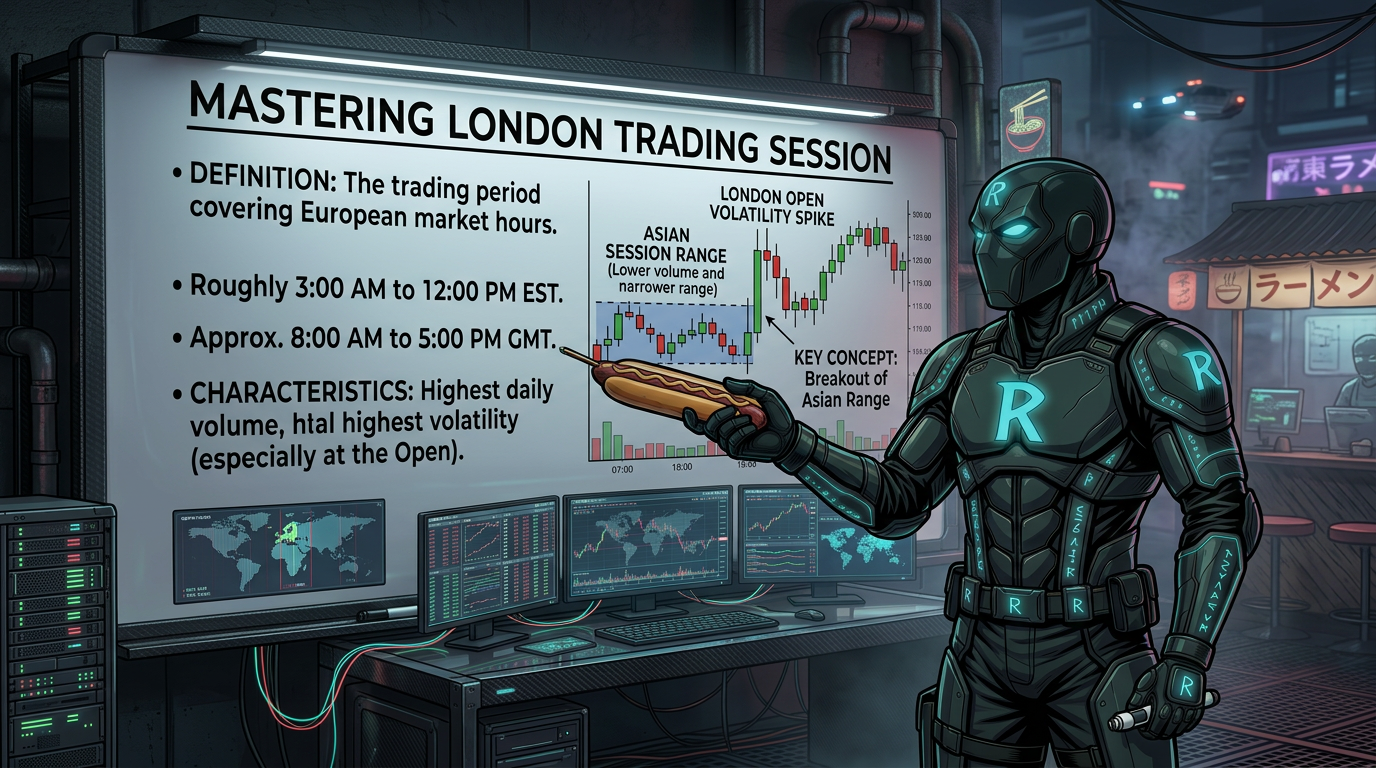
The London session is the trading period that covers the European market hours, roughly 3:00 AM to 12:00 PM EST. It is known for having the highest trading volume of the three major sessions.
Explanation
There are three main trading sessions: Tokyo (Asia), London (Europe), and New York (US). The Tokyo session tends to be quieter with smaller price moves. The New York session is volatile and news-driven. The London session sits in the middle and brings in the most volume overall. High volume means bigger, cleaner price moves, which makes it popular with traders who use breakout or pullback strategies. Traders who use the London session often focus on the third hour of the session, which lines up with the opening of a new 4-hour candle. This moment brings in a fresh wave of volume and is a good time to look for high-probability trade setups. A key part of trading London well is understanding how the previous Tokyo session moved. If price is near the top of the Tokyo range at London open, it may pull back. If it is near the bottom, it may push higher. This push-and-pull behavior is a core characteristic of how price moves across sessions. A simple three-step approach works well here: first, find the overall direction using higher and lower timeframe structure. Second, identify a key area of interest where price has reacted before. Third, wait for an entry signal like a market structure shift or a break-and-retest pattern. Stacking multiple confluences, such as higher timeframe trend, lower timeframe structure shifts, and correlated assets like DXY, increases the probability of a successful trade.
Example
A trader notices gold is near the bottom of the Tokyo session range at London open. Higher timeframe structure is bullish. They wait for the third hour, spot a key support zone, and enter a long trade after a 15-minute market structure shift confirms the move.
Why It Matters
The London session offers the most trading volume of any session, which means price moves tend to be cleaner and more directional. Understanding when and how to trade this session helps traders avoid low-probability setups and focus on high-quality entries with better risk-to-reward ratios.
Common Misconceptions
Reality: The third hour of London session, which aligns with a new 4-hour candle open, often provides better setups because volume is more established and direction is clearer.
Reality: Low timeframe direction can be misleading without higher timeframe context. If the higher timeframe trend is bullish, low timeframe bearish moves may just be pullbacks to buy from.
Reality: Pullback and mean-reversion traders can also do well in London session by waiting for price to retrace to a key level before entering in the direction of the trend.
Reality: The Tokyo session range heavily influences how London moves. Ignoring it means missing an important piece of context for your directional bias.
Frequently Asked Questions
What time does the London session start and end?
The London session typically runs from around 3:00 AM to 12:00 PM Eastern Time. The most active period is usually the first few hours after it opens.
Why is the London session considered the best session to trade?
It has the highest trading volume of the three major sessions. More volume usually means more consistent and directional price moves, which makes it easier to find clean setups.
What is the best time within the London session to take a trade?
Many traders focus on the third hour of London session. This is when a new 4-hour candle opens and fresh volume comes in, which often leads to stronger and more reliable moves.
Why does the Tokyo session matter for London trading?
The Tokyo session sets the overnight range. Where price sits within that range at London open gives you a clue about direction. Near the top of the range suggests a possible pullback. Near the bottom suggests a possible bounce.
What is the three-step strategy for trading London session?
Step one is finding your directional bias using higher and lower timeframe structure. Step two is identifying a key area of interest where price has reacted before. Step three is waiting for an entry signal like a market structure shift or break-and-retest before taking the trade.
Can pullback traders use the London session?
Yes. While breakout traders often focus on the London open, pullback traders can wait for price to move into a key level and then look for a lower timeframe entry signal to join the trend.
How do you find direction during the London session?
Look at the higher timeframe trend first. Then check where price is within the previous Tokyo session range. Finally, look at lower timeframe structure to see if it is starting to align with the higher timeframe direction.
Does DXY (US Dollar Index) matter when trading London session on gold?
Yes. Gold and DXY often move in opposite directions. If DXY is shifting bullish, that can be added confirmation to look for a sell on gold, and vice versa. Using correlated assets adds another layer of confluence to your trades.