
Trading Plan — Definition and How to Build One | runic.tools
Definition
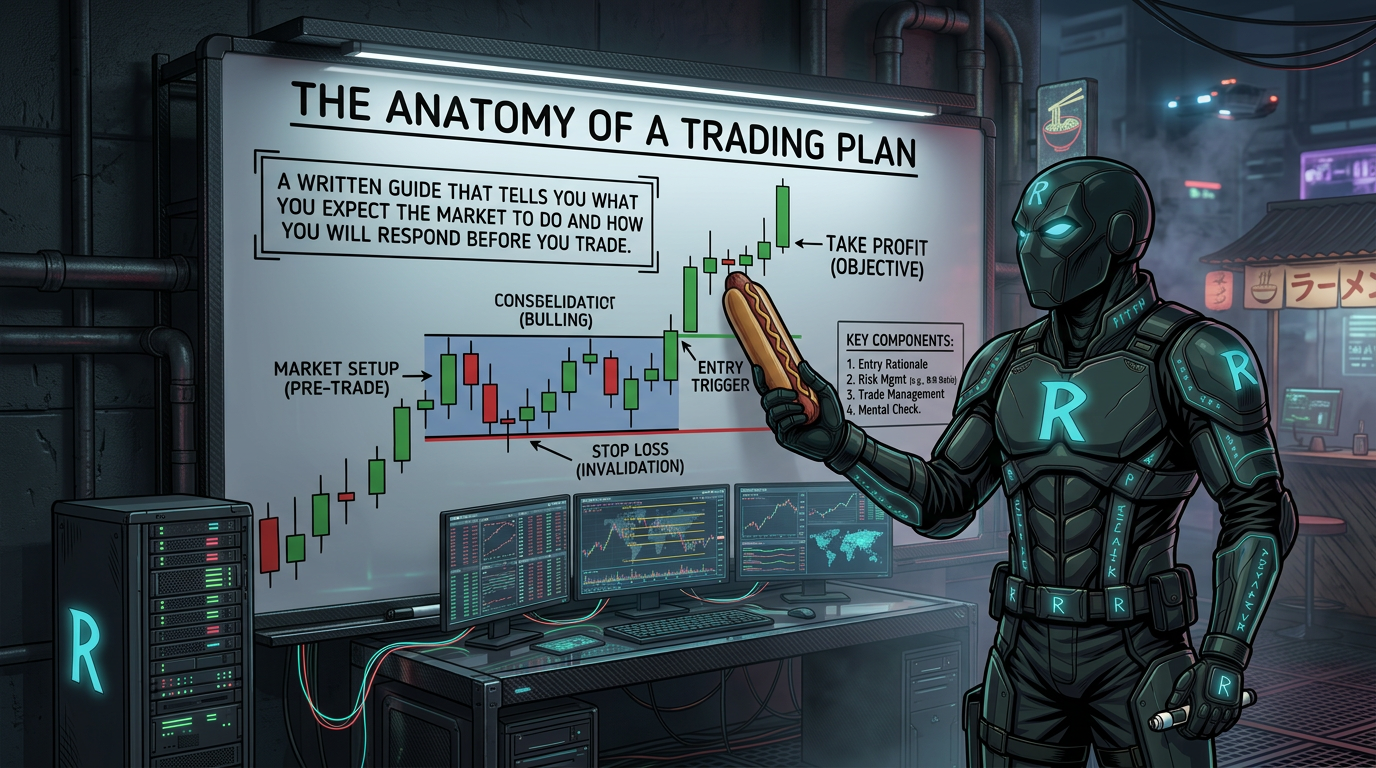
A trading plan is a written guide that tells you what you expect the market to do and how you will respond before you start trading. It removes guesswork and keeps your decisions consistent.
Explanation
A trading plan covers everything from the night before to the end of the trading day. Before the market opens, you review higher time frame charts, mark key price levels, check the economic calendar, and decide whether you expect the market to go up or down. That expectation is called your daily bias. Once you have a bias, you only look for trade setups that match it. If you are bullish, you ignore sell signals. If you are bearish, you ignore buy signals. Everything else is noise. During the trading session, you look for signatures in price that confirm your plan, then execute based on your rules. After trading, you close your charts, take a break, and then journal what happened. You write down what you did well, what you did poorly, how you felt, and what you will focus on tomorrow. A trading plan also includes physical habits like sleep, exercise, and meals, because your mental and physical state directly affects how well you trade. Without a plan, you are essentially gambling. With a plan, you have something to measure yourself against and improve from.
Example
Before going to bed, a trader marks the previous day's high and low on the NASDAQ, checks for any morning news releases, and writes down that they expect the market to move higher tomorrow. That written game plan is their trading plan for the next session.
Why It Matters
A trading plan is the difference between gambling and trading professionally. It gives you a clear direction before price starts moving so you are not making emotional decisions in real time. It also lets you journal and improve, because you had expectations you can compare to what actually happened. Traders who skip planning tend to overtrade, flip their bias mid-session, and struggle to learn from mistakes. Traders who plan consistently build an edge over time.
Common Misconceptions
Reality: A trading plan includes your bias, the specific setups you will look for, the levels you are watching, your rules for entering and exiting, and even your pre-market physical routine. It is a full operating system for your trading day.
Reality: Flipping your bias mid-session is one of the most common causes of losses. If your plan is wrong for the day, it is better to take no trade and come back tomorrow with a fresh plan.
Reality: Over-analyzing leads to burnout. A solid trading plan can be built in 20 to 30 minutes the night before. Spending too much time staring at charts before the session often leaves you mentally exhausted when it is time to actually trade.
Reality: Skipping workouts, poor sleep, and bad nutrition directly affect your mental state. Traders who neglect their physical routine often find themselves breaking rules, overtrading, and making emotional decisions.
Frequently Asked Questions
What should a trading plan include?
A trading plan should include your daily bias (bullish or bearish), the key price levels you are watching, any news events that could affect volatility, the specific setups you will look for, your rules for entering and exiting trades, and a journaling section to review after the session.
When should I build my trading plan?
The night before is ideal. Review the daily chart close, mark your key levels, and write down your bias. You can also do a quick review one to two hours before the market opens to add intraday levels. Do not skip this step and go straight to the charts when you wake up.
What is a daily bias in a trading plan?
A daily bias is your expectation for whether the market will go up or down that day. Once you set a bias, you only look for trade setups that match that direction. If you are bullish, you ignore sell signals. If you are bearish, you ignore buy signals.
Can I change my bias during the trading session?
It is possible but risky. Flipping your bias mid-session has caused many traders to take unnecessary losses. Most experienced traders stick to one idea for the day. If the plan does not work out, they close the charts and come back the next day.
Why do I need to journal as part of my trading plan?
Journaling lets you learn from each day. If you had a plan and the market went against you, you can figure out if you did something wrong or if it just did not work out. Without a plan, there is nothing to compare to and nothing to learn from.
Does my physical routine really affect my trading?
Yes. Sleep, exercise, meals, and even a morning walk all affect your mental state. Traders who skip these habits often end up more emotional, less focused, and more likely to break their rules during the session.
What should I do after a losing trade?
Close your trading terminal and go for a 10 to 15 minute walk. Do not sit at the screen and try to win the money back. Revenge trading after a loss is one of the fastest ways to blow up an account. Come back when you are calm.
Is it okay to skip trading some days?
Yes. Professional traders take planned breaks. You do not have to trade every single day. If you are feeling off, burned out, or on a losing streak, stepping away and resetting can protect your account and your performance.