
Trading Psychology — Definition | runic.tools
Definition
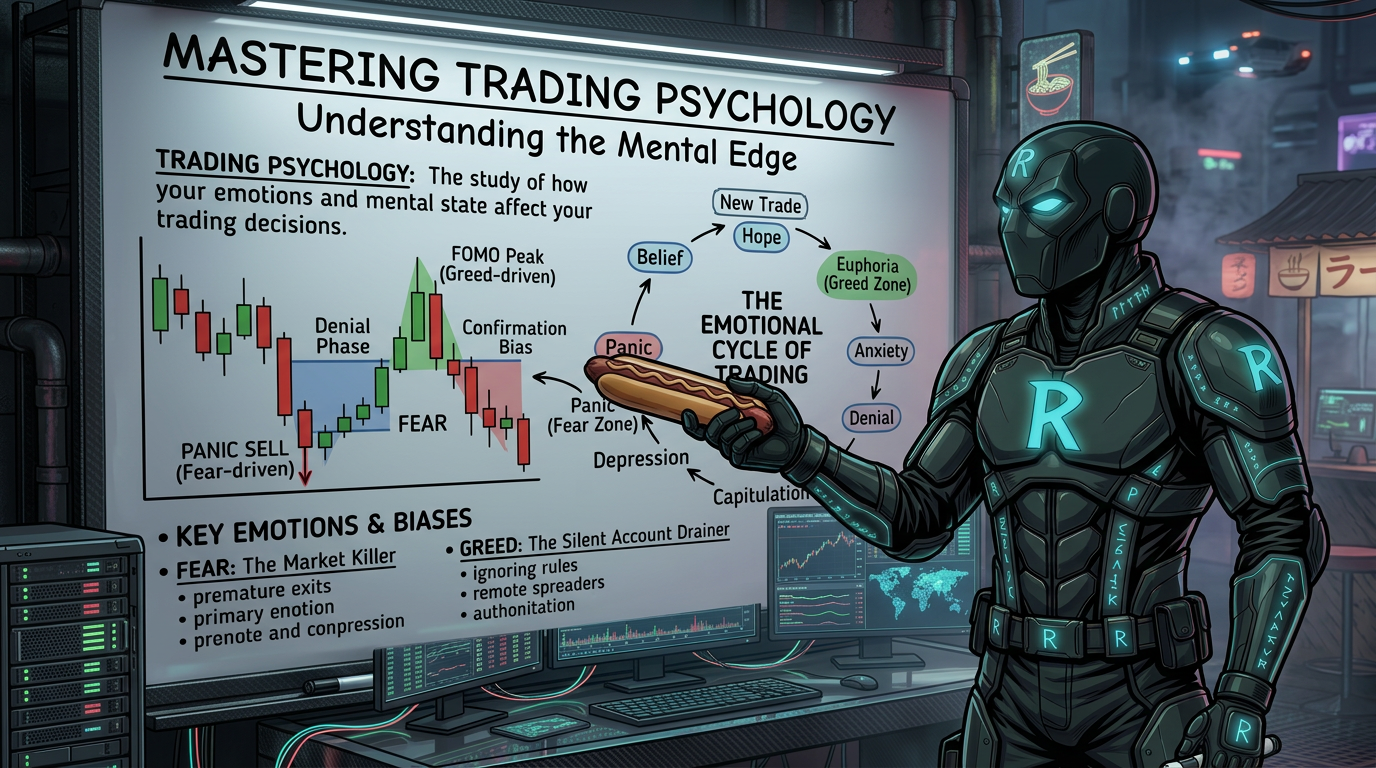
Trading psychology is the study of how your emotions and mental state affect your trading decisions. It covers how fear, greed, overconfidence, and burnout can lead to costly mistakes — even when you know the right thing to do.
Explanation
Most traders focus on finding the perfect strategy, but strategy alone won't make you profitable. Your mindset matters just as much — maybe more. When you lose a trade, your brain treats it like a physical threat. Adrenaline kicks in, clear thinking shuts down, and you start making emotional decisions instead of rational ones. This leads to revenge trades, breaking your own rules, and chasing losses. There are five core areas of trading psychology every serious trader needs to work through: (1) Emotional self-awareness — recognizing what you're feeling before you trade. Fear, anger, or euphoria are signals to step back, not to enter a trade. Keeping an emotional journal helps you spot patterns that are hurting your results. (2) Discipline over excitement — successful trading is boring. It means following the same rules every day, sometimes taking zero trades because nothing meets your criteria. Discipline is not about willpower. It is about building routines and systems that make good decisions automatic. (3) Surviving losing streaks — drawdowns will happen. The danger is when you start trading to recover losses instead of trading your plan. Rules like stopping after two losses in a day or cutting position size after three consecutive losses protect you from spiraling. (4) Ego and strategy adaptation — every strategy eventually stops working. The market changes. Traders who last treat their edge like something with an expiration date. They track their stats, watch for changes, and adapt without drama. Attaching your identity to a specific strategy makes it hard to change when you need to. (5) Recovery and burnout prevention — trading is entirely mental. Burnout creeps up slowly. Taking walks after sessions, journaling, maintaining hobbies, and scheduling forced breaks are not signs of laziness. They are how you stay sharp and perform at a high level over the long term.
Example
A trader notices they feel angry after a bad morning at work. Because they practice good trading psychology, they recognize that emotion before opening the charts and decide to skip trading that day rather than risk making impulsive decisions.
Why It Matters
You can have a great strategy and still lose money if your emotions are running the show. Trading psychology is what separates traders who blow up from those who last years and grow consistently. Understanding your mental triggers, building disciplined routines, and knowing when to step away are skills that directly impact your bottom line.
Common Misconceptions
Reality: Strategy is only part of the equation. Many traders lose money with the same strategy that later made them profitable — the difference was their mental approach, not the setup.
Reality: Discipline is about building systems and routines that make good decisions automatic. When your process is ingrained, you don't rely on willpower — you rely on habit.
Reality: Mental recovery is a performance skill. Trading on an empty tank leads to slow, costly mistakes. Scheduled rest keeps your decision-making sharp.
Reality: Losing streaks are normal. The real danger is when you start revenge trading to recover losses. That's when small drawdowns turn into account-destroying spirals.
Reality: Successful traders often take very few trades. Waiting for only the best setups — and skipping everything else — is a sign of discipline, not laziness.
Frequently Asked Questions
What is trading psychology?
Trading psychology is how your emotions, habits, and mental state affect the decisions you make while trading. Things like fear, greed, overconfidence, and burnout can cause you to break your own rules and lose money even when you know better.
Why do emotions hurt my trading?
Your brain treats financial loss like a physical threat. It floods your body with adrenaline, shuts down logical thinking, and pushes you into survival mode. That's when revenge trades, panic exits, and rule-breaking happen.
What is a revenge trade?
A revenge trade is when you take a trade not because it meets your rules, but because you want to win back money you just lost. These trades are usually poorly planned and often make the situation worse.
How do I improve my trading psychology?
Start by keeping an emotional journal. Before each trade, write down what you are feeling. After each trade, note how your emotions affected your decision. Over time, you will spot patterns — like always making impulsive trades when you're angry — and you can start managing them.
What should I do during a losing streak?
Stop trying to make the money back immediately. Use pre-set rules to protect yourself — like stopping for the day after two losses or cutting your position size in half after three losses in a row. Your goal during a drawdown is to preserve capital and rebuild your confidence, not to recover fast.
How do I build trading discipline?
Build a consistent daily routine that you follow before and after every trading session. Check the same things every morning. Use a pre-trade checklist. When your process becomes automatic, you remove decision fatigue and reduce the chance of emotional mistakes.
How do I know if I'm burned out from trading?
Signs of burnout include skipping your routine, taking lower-quality trades, feeling foggy or impatient, and making small mistakes you normally wouldn't. Burnout builds slowly and is easy to miss. Scheduled breaks, exercise, and hobbies outside of trading help prevent it.
What should I do if my trading strategy stops working?
Track your stats — win rate, profit factor, average win and loss — and compare them to your normal baseline. If performance drops significantly for two weeks in a row, investigate whether the market has changed. Be willing to adapt your approach. Holding onto a broken strategy because your ego is attached to it is one of the most common ways traders blow up.