
How Many Contracts Should You Trade on a 50K Funded Account?
What a 50K Funded Account Actually Gives You
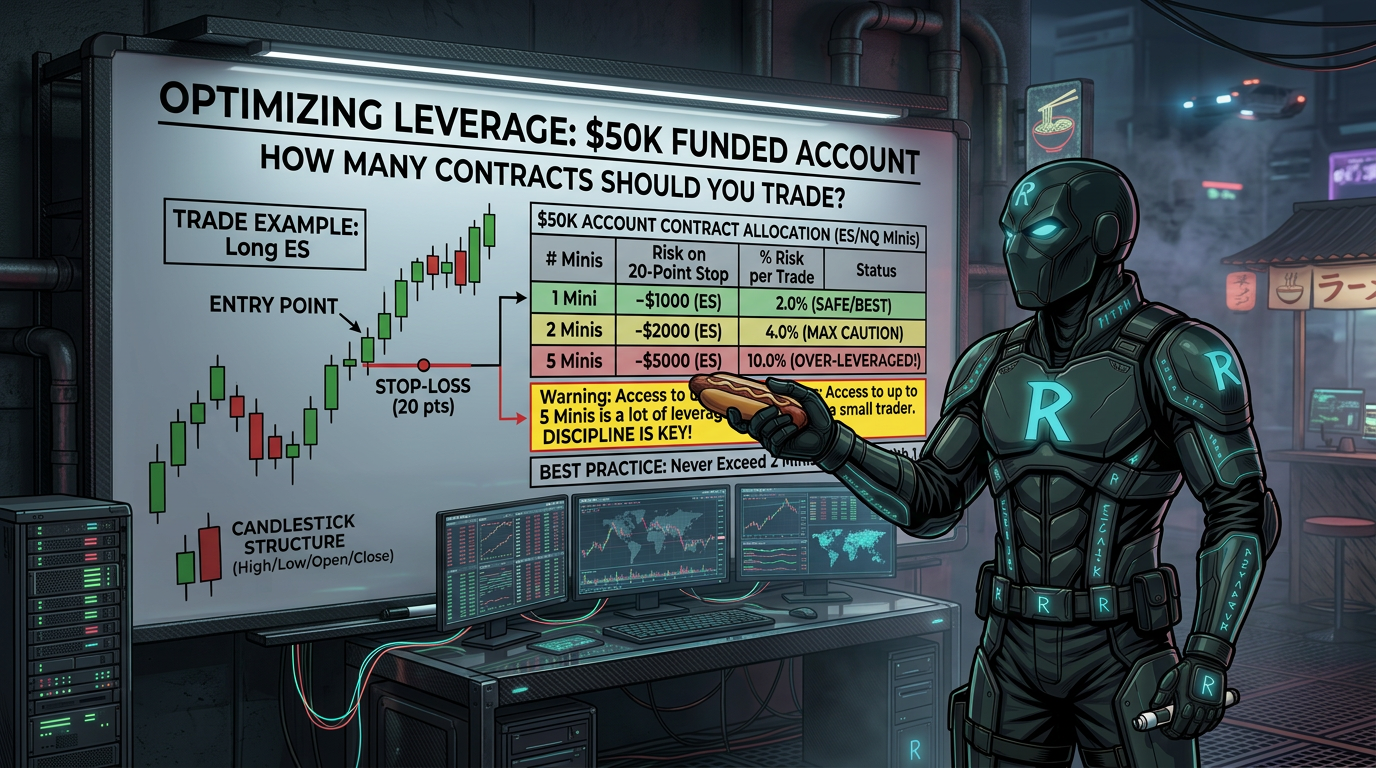
A 50K funded account like TopStep Express lets you trade up to 5 mini contracts. That might sound small, but it is serious leverage. You do not need a 150K account to make meaningful money. This trader earned more than an average annual salary in just one month trading only 5 mini contracts. Smaller accounts are also cheaper to get, easier to pass, and have a smaller profit-to-drawdown ratio. Do not underestimate what a 50K account can do.
How Many Contracts to Use
This trader used up to 5 mini contracts on his 50K TopStep account. He did not always trade the maximum. The number of contracts you use should match your risk per trade, not just the account limit. More contracts means bigger wins but also bigger losses. The key is to only increase contracts when you have a proven edge and strong discipline. Trading the max just because you can is one of the fastest ways to blow a funded account.
Risk Per Trade and Daily Loss Limits
This trader set a personal daily loss limit. The moment he hit that limit, he locked the account and stopped trading for the day. This is one of the most important habits for funded account traders. He also locked the account after hitting a good profit target, even if it was only 200 or 300 dollars. The longer you stay in the market, the more chances you have to give back profits. Protecting both your downside and upside is what builds consistent results.
Win Rate and Risk to Reward
This trader runs a 1-to-1 risk to reward ratio with a 70 percent win rate. He is not trying to hit big runners every trade. He scalps from key levels using volume profile and takes quick 1-to-1 trades. This style works for him because he needs frequent wins to stay mentally sharp. His profit factor was 2.37, which means for every dollar lost he made 2.37 dollars. Know your trading personality. A 1-to-1 setup with a high win rate can be just as powerful as going for bigger targets.
The Payout Strategy and When It Goes Wrong
On payout days, this trader took extra risk by adding an additional 2,000 dollars in exposure to try to squeeze a bigger payout. It did not work out. He had one of his biggest losing days as a result. He still took the payout right after and left the drawdown at 4,500 dollars, which was still above his starting balance. He does not recommend this approach for most traders. Chasing a bigger payout by risking more is a gamble, not a strategy. Stick to your normal risk rules on payout days.
Trading Overnight and Session Timing
This trader noticed his average trade duration was about 18 minutes, longer than he expected for a scalper. The reason was that many of his setups came in the overnight session, the London open, and even the Asian market. The Asian session moves slower and requires wider stops and bigger targets because there is less volatility. If you trade outside the main US session, expect slower price action and adjust your expectations and position size accordingly.
Long vs Short Balance and Avoiding Bias
This trader took close to a 50/50 split between long and short trades. He admitted he naturally leans long but works to stay balanced and look for short setups when the market shows them. Being biased toward one direction means you will miss good trades on the other side. Markets go both ways. Train yourself to look for short setups just as seriously as long setups.
Monthly Results Breakdown
January 2025 brought in 6,261 dollars. February was on track for around 5,232 dollars. Total payouts were heading toward 8,000 dollars for the month. This was all from a single 50K funded account trading up to 5 mini contracts. The trader averaged about 3,000 dollars per week on good weeks. These results came from consistent habits, not lucky trades. Locking the account after losses and after wins, sticking to a clear strategy, and not overtrading were the main drivers.
Frequently Asked Questions
How many contracts can I trade on a 50K TopStep account?
A 50K TopStep funded account allows up to 5 mini contracts. However, you should start with fewer contracts until you have a consistent edge. Only scale up when your risk management and win rate are proven.
Can you actually make good money on a 50K funded account?
Yes. This trader made over 11,000 dollars in his first month trading a single 50K account. The key is consistency, not account size. Smaller accounts are cheaper to get and easier to manage.
What risk to reward ratio should I use on a funded account?
It depends on your trading style. This trader used a 1-to-1 risk to reward with a 70 percent win rate and it worked well. There is no one-size-fits-all answer. Track your results and find what fits your personality.
Should I set a daily loss limit on a funded account?
Absolutely. Setting a personal daily loss limit and sticking to it is one of the best habits for funded account traders. When you hit your limit, stop trading for the day no matter what.
Is it smart to take more risk on payout day?
This trader tried it and it backfired. He does not recommend it. Stick to your normal risk rules on payout day. Chasing a bigger payout by risking more usually leads to larger losses.
What happens if I lock my account after hitting a profit target?
Locking your account after hitting your profit target protects your gains. The longer you trade, the more chances you have to give profits back. Many consistent traders stop for the day once they hit their goal.
Does it matter which trading session I trade on a funded account?
Yes. The Asian and London sessions are slower and less volatile than the US session. If you trade those sessions, expect wider stops and targets. Adjust your position size and expectations to match the lower volatility.
How do I know if I am trading too many contracts?
If a single losing trade causes panic or makes you break your rules, you are probably trading too many contracts. Your position size should feel manageable even on a losing day. Scale down until losses feel controllable.