
How to Stop Overtrading: 4 Honest Fixes That Actually Work
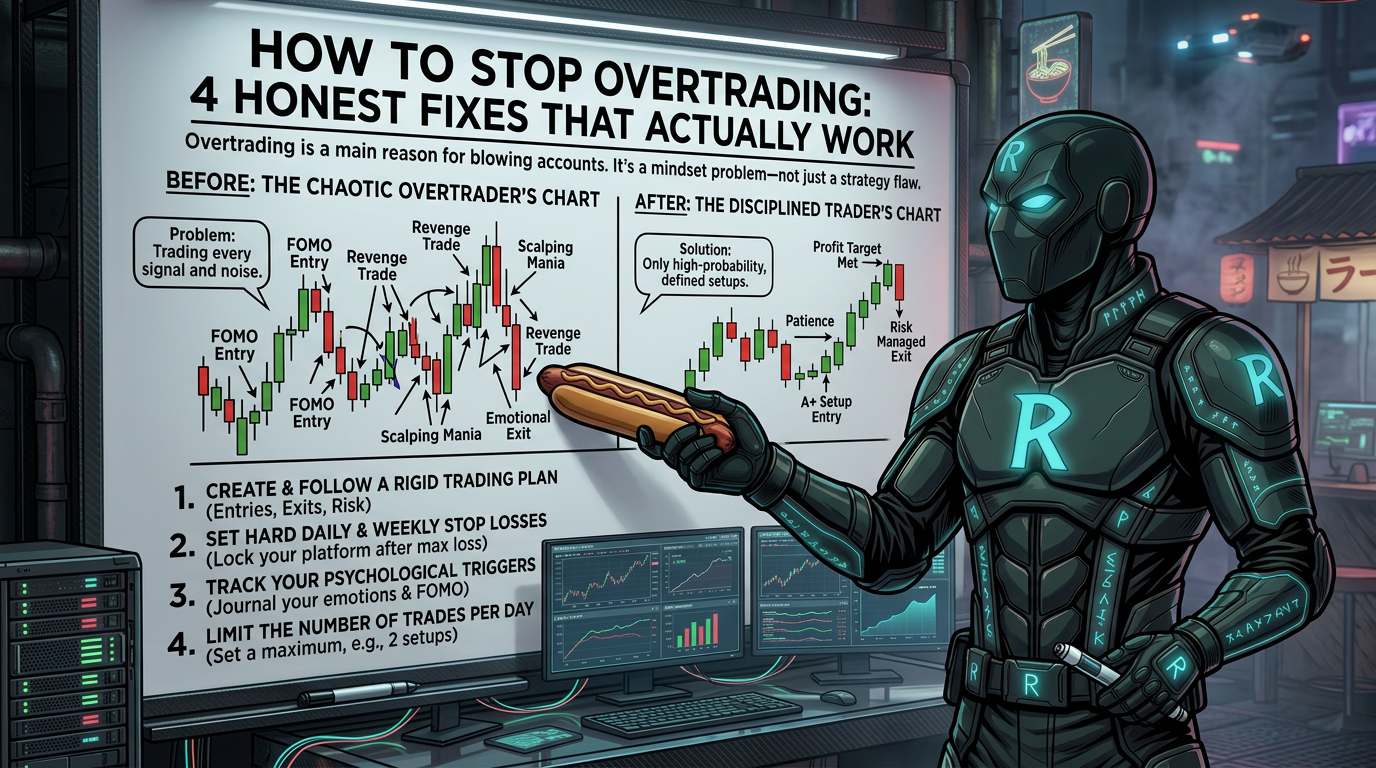
Why You Keep Overtrading
Most traders wake up focused on one thing: making money fast. You sit down, take a trade, maybe win, then keep looking for more. You give back profits. Then you trade to get them back. Then you go red. Then you shame yourself. Then you do it all again tomorrow.
This cycle is not about your strategy. It is about your mindset. You are trading like you are inside the battle — tied to every outcome, every dollar, every mistake. Until you zoom out and see trading like a game you control from the outside, the cycle will not break.
Fix 1: Get Comfortable Doing Nothing
Here is the truth most people hate: 90% of trading is doing nothing. You are not paid for your time in the market. You are paid for your decisions. Bad decisions cost money. No decision costs nothing.
Doing nothing IS doing something. It is your defense. A football team without a good defense will lose. A trader who cannot sit still will lose. Inaction is not lack of progress. It is actually building the discipline muscle you have been skipping.
Every hour you sit on your hands and do not take a bad trade, you are winning while others are losing money on bad setups.
Fix 2: Find Wins Outside of Trading
If trading is your only source of wins each day, every loss destroys your whole day. That pressure pushes you to trade more to fix the feeling — not because the setup is good.
Your trading reflects who you are outside of trading. If you lack discipline in daily life, you will lack it at your desk. If you cannot control emotions at home, you will not control them on a chart.
Plan something after your trading session. Go to the gym. Take a walk. Work on a skill. Get a win somewhere else. This takes the pressure off trading to be your only source of progress.
Fix 3: Stop Letting Fear Drive Your Trades
Fear is one of the biggest causes of overtrading. Fear of missing a move. Fear of not reaching your goal in time. Fear of proving everyone right who doubted you.
When you trade from fear, you rush. You take setups that are not there. You add size when you should not. Fear makes the market feel like an enemy you need to beat right now.
The market is not going anywhere. There will always be another setup. Operating from calm and clarity — not fear — is what separates profitable traders from struggling ones.
Fix 4: Let Go of Past Mistakes and Losses
Many traders carry a mental scoreboard of every blown account, every bad trade, every dollar lost. They trade every new day trying to climb back from all of it. That weight slows you down.
The past is not real in the present moment. You cannot trade your way out of yesterday. Every session must start clean. Successful traders treat each day as day one — no baggage, no grudges against the market.
This also means forgiving yourself. You made mistakes. Every trader does. Holding onto guilt makes you repeat the same cycle. Drop it and move forward.
Start Acting Like the Trader You Want to Be
You do not become a profitable trader at some distant finish line. You become one by deciding to act like one right now.
Ask yourself: what does my best trading self look like? That person is calm. They are not rushed. They wait for their setup and walk away when it is done. They do not need the market to validate them.
Start acting like that person today — even before the results show up. The habits come first. The results follow. Calling yourself an overtrader keeps you stuck in that identity. Choosing to act like a disciplined trader starts the change.
Frequently Asked Questions
Why do I keep overtrading even when I know I should stop?
Knowing and doing are different things. Most traders overtrade because of fear, pressure to make money, or the need for validation — not because they lack knowledge. Until you deal with those root causes, the behavior keeps repeating.
Is it really okay to do nothing and take no trades?
Yes. Doing nothing is one of the most important skills in trading. You only get paid for good decisions, not for time spent in the market. Sitting out a bad setup protects your account the same way a good defense protects a sports team.
How do I stop revenge trading after a loss?
The best move after a loss is to step away from the charts. Go do something else and get a win outside of trading. Coming back to the market angry or desperate almost always makes things worse.
How do I handle the pressure of needing to hit a payout or pass an account?
That pressure is real, but it hurts your trading. When you trade to hit a number instead of trading your plan, you force bad trades. Focus on executing well each day. The payouts follow good process — not desperation.
What does it mean that trading reflects your identity?
Your habits, emotions, and discipline outside of trading show up inside it too. If you are impulsive in daily life, you will be impulsive at your desk. Working on patience, routine, and self-control in everyday life will improve your trading.
How do I stop feeling guilty after a bad trading day?
Guilt is normal, but holding onto it keeps you stuck. Acknowledge the mistake, note what you can learn from it, and then let it go. Every new session is a clean slate. Carrying past losses into new days makes it harder to trade clearly.
How many trades should I take per day to avoid overtrading?
There is no magic number, but less is usually better. Focus on quality over quantity. Many traders do best with one or two high-quality setups per session and a strict cut-off time. Set rules before you trade, not during.
Can changing my mindset really make me a better trader?
Yes. Most struggling traders already know enough strategy. What holds them back is emotional control, self-discipline, and how they handle pressure. Fixing your mindset is often more impactful than learning a new setup or indicator.