
Should I Quit Day Trading? What to Do When You're Ready to Give Up
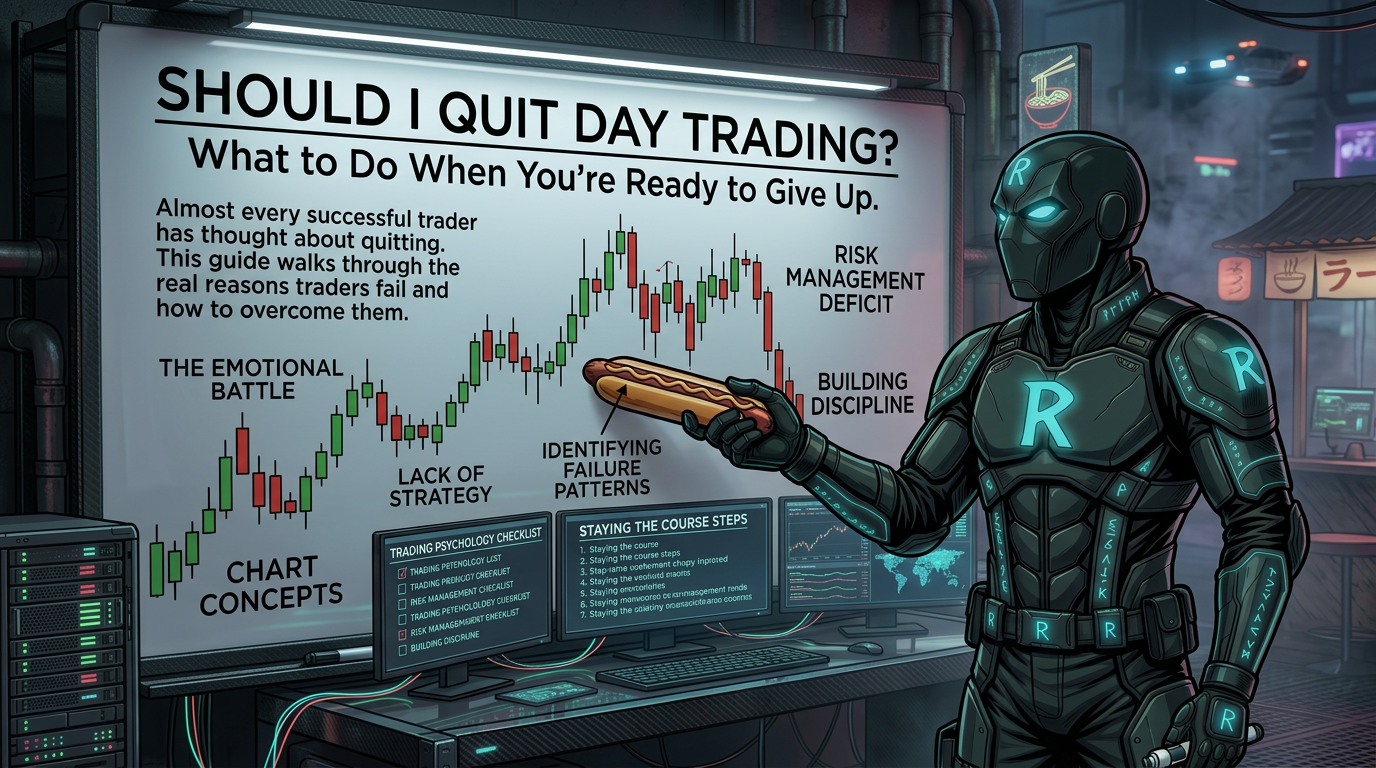
Why Most Traders Want to Quit
Trading is hard. Most people spend years losing money, blowing up accounts, and jumping from one strategy to the next. It feels like no matter how hard you try, nothing works. You're not alone. This is the normal path for most traders before they find consistency. The struggle isn't a sign you should quit. It's a sign you're still learning.
The Real Reason You Keep Losing
Most traders blame their strategy when things go wrong. But the real problem is usually psychology. Fear, impatience, and desperation cause bad decisions. When you trade to escape your job or pay your bills fast, you overtrade and overleverage. You break your own rules. You revenge trade after losses. None of that is a strategy problem. It's a mindset problem. Fix the mindset first.
The Fear That Is Secretly Causing Your Losses
Fear of failure is sneaky. It feels like ambition but it destroys your trading. When you're afraid of losing, you cut winners too early and hold losers too long. When you're afraid of missing out, you overtrade. The fear you're trying to avoid ends up becoming the very thing you create. Recognizing this is a turning point. Once you see how fear drives your decisions, you can start making trades based on logic instead.
Why Your 'Why' Matters More Than Your Strategy
A strong reason for trading keeps you going when things get hard. Vague goals like 'I want to make money' are not enough. You need a deeper reason. Freedom, family, controlling your time, building something real. That deeper reason is what keeps you disciplined. It stops revenge trades before they start. It reminds you that one bad week is not the end of the road.
Stop Jumping Strategies. Commit to One.
Switching strategies every few months is one of the biggest mistakes traders make. When you abandon a system after a losing streak, you never give it a real chance to work. You also never learn what went wrong. Pick one strategy that makes sense to you. Back test it. Trade it consistently for at least six months. Document every trade. Review your mistakes. Treat it like a business, not a lottery ticket.
Protect Your Mental Capital First
Your money can be reloaded. Your mental health cannot be ignored. If you're mentally burned out, your trading will suffer no matter how good your system is. Take breaks when you need them. Do not revenge trade after losses. Spend time away from the charts. Surround yourself with people who support your goals. Your mind is your most important trading tool.
Prop Firms Can Give You the Capital You Need
One of the biggest problems for retail traders is not having enough capital to trade meaningfully. A small account makes every loss feel catastrophic and tempts you to overleverage. Prop firms offer a way to trade larger capital without risking your own savings. You pass an evaluation, prove you can trade with discipline, and then trade the firm's money. This can be a game-changer if your psychology and strategy are already solid.
Most Traders Quit Right Before the Breakthrough
Here is the hard truth. Most people give up right before things would have clicked. Years of screen time, money spent on education, and hard lessons learned get thrown away at the worst possible moment. You have already paid a real price to get where you are. That experience has value. Quitting does not erase those years. It just means you never get to use what you learned. Stay in the game long enough to see your work pay off.
Frequently Asked Questions
Is it normal to think about quitting trading?
Yes. Almost every successful trader has been at the point of quitting. Feeling frustrated or burned out does not mean trading is not for you. It usually means something in your approach or mindset needs to change.
How do I know if I should keep trading or actually stop?
Ask yourself if you are losing because of your strategy or because of your emotions. If you are breaking your own rules, revenge trading, or overleveraging, those are fixable problems. If trading is causing serious financial or mental health harm, it is okay to take a real break and reset.
Why do I keep blowing up my account even when I know better?
Usually because fear or desperation is driving your decisions without you realizing it. When you trade to escape a bad situation fast, you take risks that break your rules. The fix is addressing the emotional triggers behind your trades, not just the trades themselves.
Does strategy matter if my psychology is bad?
Not much. You can have a great strategy and still lose consistently if fear, ego, or desperation are controlling your decisions. Psychology must come first. A solid mindset makes any decent strategy work better.
What is a prop firm and should I use one?
A prop firm gives you capital to trade in exchange for a share of your profits. You pass a test to prove you can follow rules and manage risk. It is a good option if you need more capital but cannot afford to risk large amounts of your own money.
How long should I give trading before deciding it is not working?
At least six months of trading one strategy consistently and following your rules every day. Most people never give a strategy a true fair shot before switching. Real results take time, and the learning curve is steep.
What should I do after a big losing streak?
Stop trading for a day or two. Review your trades in a journal without judging yourself harshly. Look for patterns in your mistakes. Then return to the charts with a clear head and a firm commitment to follow your rules.
How do I stay motivated when trading feels impossible?
Write down your real reason for trading, not just money, but what that money represents. Freedom, family, time, independence. Read it before every session. That deeper reason is what keeps you disciplined when emotions want to take over.