
How to Recover After a Red Day in Trading
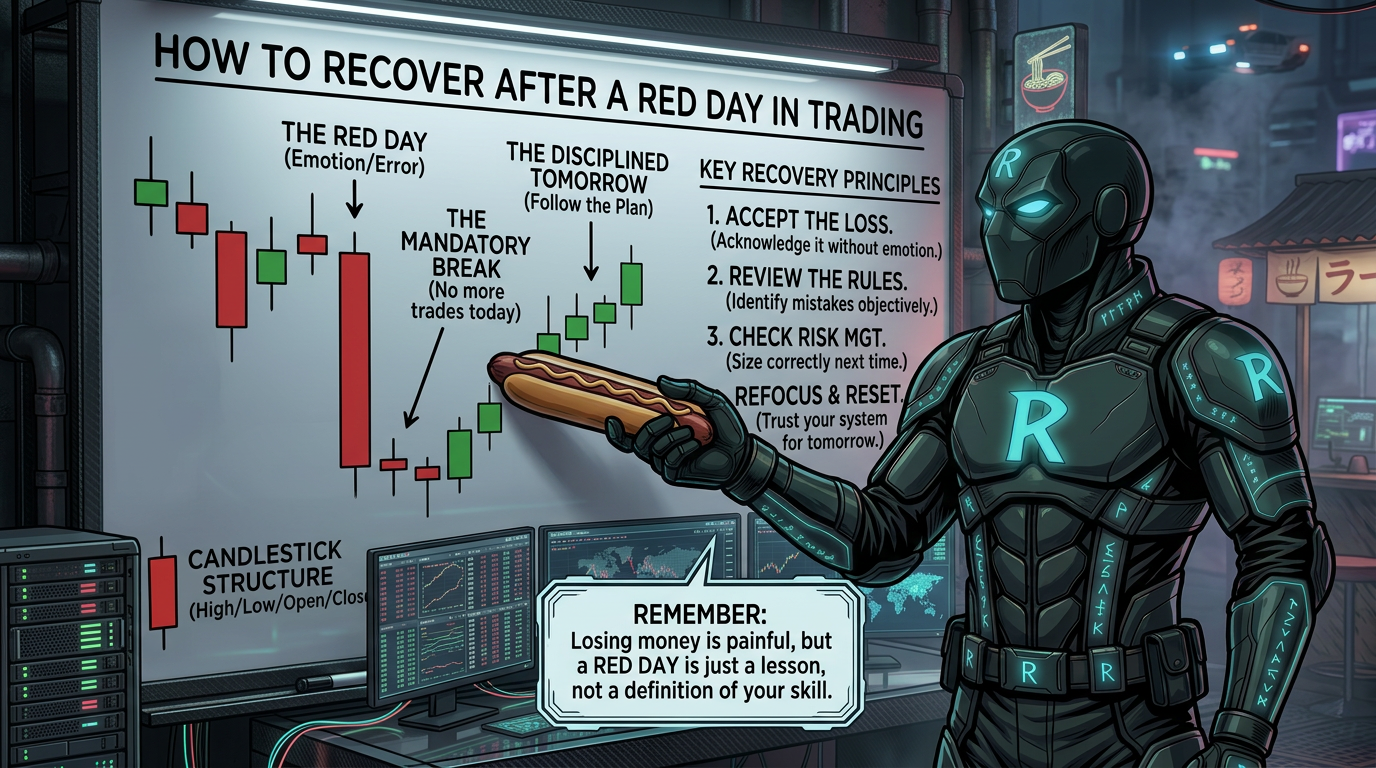
Step 1: Size Down After a Loss
After a bad loss, your first move should be to trade smaller. This feels wrong. You want to make the money back fast. But trading bigger when you are upset almost always leads to more losses. Smaller size gives you space to focus on your strategy instead of your emotions. Think of it as earning your way back to full size. Start with small wins like $100 or $500 to rebuild confidence. You do not recover all at once.
Step 2: Take a Real Break
Breaks are not a sign of weakness. They are a professional tool. When you are in a losing streak, your mind is tired and your judgment suffers. Even one day away from the charts can reset your thinking. Some traders take a full week off after a major loss. Many pros step back during slow market periods like summer or late December. You cannot force profits from a slow or choppy market. Rest and come back fresh.
Step 3: Stop Comparing Yourself to Other Traders
Seeing someone post a $20,000 win online can make your $200 day feel worthless. It is not. Big wins and big losses are both relative to account size. A trader with a $500,000 account and a trader with a $10,000 account are playing very different games. Copying someone else's position size because you want their results is one of the fastest ways to blow up your account. Focus on your own progress and your own chapter.
Step 4: Review Your Trading Journal
When you are in a slump, your brain focuses on the losses and forgets the wins. A trading journal fixes that. Go back and read your past entries. Remind yourself of the trades that worked and why. A good journal tracks your trades, your strategies, your risk, your P&L, and your emotional state during each session. Patterns will show up over time. You will start to see what works and what gets you in trouble. This builds real confidence because it is based on your own data.
Step 5: Think of Losses as Market Tuition
Nobody learns to trade for free. Every loss teaches you something if you are paying attention. Instead of thinking 'I lost $500,' think 'I paid $500 to learn this lesson.' This mindset shift makes it easier to review your trades honestly without beating yourself up. Most traders lose money in their first year. That is normal. The goal in the beginning is not to get rich. It is to learn the craft. Your losses now can lead to consistent profits later if you use them to improve.
Step 6: Build a Strong Support System
Trading alone is hard. Trading while people around you say 'just get a real job' is even harder. Find people who understand what you are doing. That could be an online community, a trading group, or even just one friend who trades. Having someone to celebrate wins with and talk through losses with makes a real difference. Negativity from unsupportive people can wreck your confidence and push you to make emotional decisions. Protect your mindset by choosing who you talk to about trading.
Bonus Tips: Move Your Body and Eat Good Food
Sometimes none of the tips above feel like enough. When that happens, step away from the screen entirely. Go work out. Run, lift, do a class, anything that makes you sweat. Physical activity shifts your focus and burns off frustration. After that, eat something you enjoy. These things sound simple but they work. Taking care of your body helps you take care of your trading mindset. Your best trading happens when you feel like a functioning human, not a stressed-out mess.
Frequently Asked Questions
What should I do right after a big trading loss?
The most important thing is to stop trading for the rest of that day. Do not try to make the money back immediately. Size down, take a break, and come back with a clear head.
How long should I take a break after a losing streak?
It depends on how bad the streak was. One bad day might only need one day off. A really rough week of losses might call for a full week away from the charts. Listen to how you feel.
Why does sizing down help after a loss?
Smaller positions mean smaller losses if you are still not trading your best. It also takes away the pressure of needing to make back big money fast, which leads to emotional and impulsive trading.
Is it normal to lose money when you start trading?
Yes, very normal. Most traders lose money in their first year. The goal early on is to learn, not to profit. Think of those losses as the cost of your trading education.
What should I write in a trading journal?
Record every trade with the ticker, your entry and exit, how much you risked, whether you won or lost, which strategy you used, and how you felt emotionally during the trade.
How do I stop comparing myself to traders who make huge profits?
Remember that their account size is almost certainly different from yours. A $10,000 win for someone with a million dollar account is different from a $500 win on a $10,000 account. Both can be great results. Focus on your own progress.
What does trading on tilt mean?
Trading on tilt means making trades based on emotion and panic rather than your strategy. It usually happens after a big loss when you are desperately trying to make the money back. It almost always makes things worse.
Can exercise actually help after a bad trading day?
Yes. Physical activity helps reduce stress and clears your head. It shifts your focus away from the loss and helps you come back to the market calmer and more focused.