
When to Move Your Stop to Breakeven
What Is the Breakeven Method?
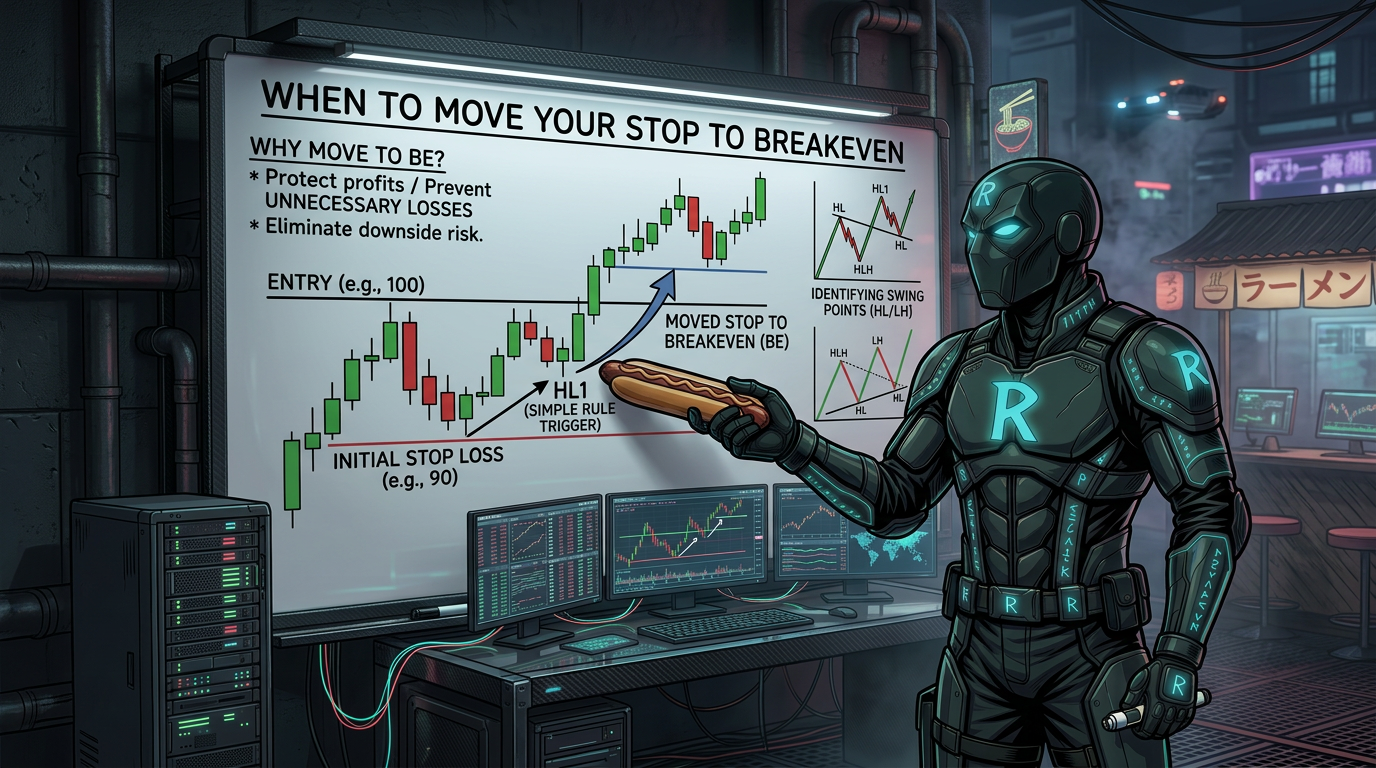
The breakeven method means moving your stop loss to your entry price after a trade moves in your favor. This way, if the trade reverses, you exit with no loss instead of a losing trade. It is not a perfect system, but it saves you money more often than not. Some traders love it. Others skip it. Try it out and see what works for you.
The Basic Rule: Internal Highs and Lows
The main trigger for moving to breakeven is the next internal high or low after your entry. For a long trade, the internal high is the nearest swing high above your entry. Once price touches that level, move your stop up to your entry price. For a short trade, do the same thing with the next internal low. This is the mechanical rule beginners should follow.
Why Winning Trades Usually Don't Stop You Out at Breakeven
A strong trade tends to move quickly in your direction. It does not spend a lot of time bouncing back to your entry area. If price hits your internal high and then drops all the way back to your entry, that is often a warning sign. Back testing shows that about 60% of the time, when price returns to the breakeven level after hitting the internal high, it goes on to stop you out anyway. So moving to breakeven in that situation actually saves you.
Inversion Fair Value Gap Setups
This method is especially useful with inversion fair value gap trades. You enter on the close above the inversion fair value gap and place your stop below it. Your breakeven trigger is the next internal high above your entry. Once price reaches that high, move your stop to entry. If the trade is strong, it will keep going and hit your target without touching your breakeven. If it pulls back to breakeven, you exit with zero loss.
When the Breakeven Method Does Not Save You
Sometimes price hits the internal high, you move to breakeven, and then the trade still works out fine. Price comes back, taps your entry, and then shoots back in your direction — but you already got stopped out. This is frustrating but expected. These moments are rare compared to the times it saves you. As you gain experience, you will start to notice setups where skipping the breakeven move makes more sense, like when there is clear liquidity above or a very strong bullish reaction at a key level.
Advanced Situations: When to Wait Longer
More experienced traders sometimes wait before moving to breakeven. For example, if there are equal highs above the internal high, it may make sense to wait until those equal highs are swept before moving your stop. This requires more screen time and pattern recognition. Beginners should stick to the simple rule: move to breakeven at the first internal high or low. Build experience before trying to filter these edge cases.
Practice This on a Funded Practice Account
Do not test this method on a live personal account right away. Use a low-cost practice or funded evaluation account first. Keep your position size small, like one or two micro contracts. Focus on getting the feel for where internal highs and lows are and how fast winning trades move. Screen time is the best teacher for knowing when to apply this method and when to adjust it.
Frequently Asked Questions
What does moving to breakeven mean?
It means moving your stop loss to the same price where you entered the trade. If the trade reverses, you exit with no profit and no loss instead of taking a losing trade.
When exactly should I move my stop to breakeven?
Move your stop to breakeven when price reaches the next internal high on a long trade or the next internal low on a short trade. That is the basic mechanical rule.
Will moving to breakeven always protect me?
No. Sometimes price will stop you out at breakeven and then continue in your original direction. This is normal and will happen. The goal is that it saves you more often than it costs you.
How often does the breakeven method actually save trades?
Based on back testing shared in the video, about 60% of the time when price returns to the breakeven level after hitting the internal high, it would have gone on to stop you out anyway. So the method is helpful more often than not.
Does this method work with any setup or just inversion fair value gaps?
The method can apply to many setups, but the video focuses on inversion fair value gap trades. The logic is the same: find the next internal structure point and use it as your breakeven trigger.
What if there are equal highs above the internal high?
In more advanced situations, some traders wait until equal highs are swept before moving to breakeven. This takes experience to judge. Beginners should stick to the basic rule and move to breakeven at the first internal high.
How do I know if a trade is strong enough to skip the breakeven move?
This comes from screen time and experience. Strong signals include a very clean bullish or bearish reaction at a key level, a sweep of liquidity, or price being at a significant daily high or low. Until you have that experience, stick to the mechanical rule.
Should I practice this on a live account?
No. Start with a low-cost practice or funded evaluation account. Keep your position size very small while you learn. You want to build experience without risking real money on a method you are still learning.