
How to Stop Revenge Trading After a Loss
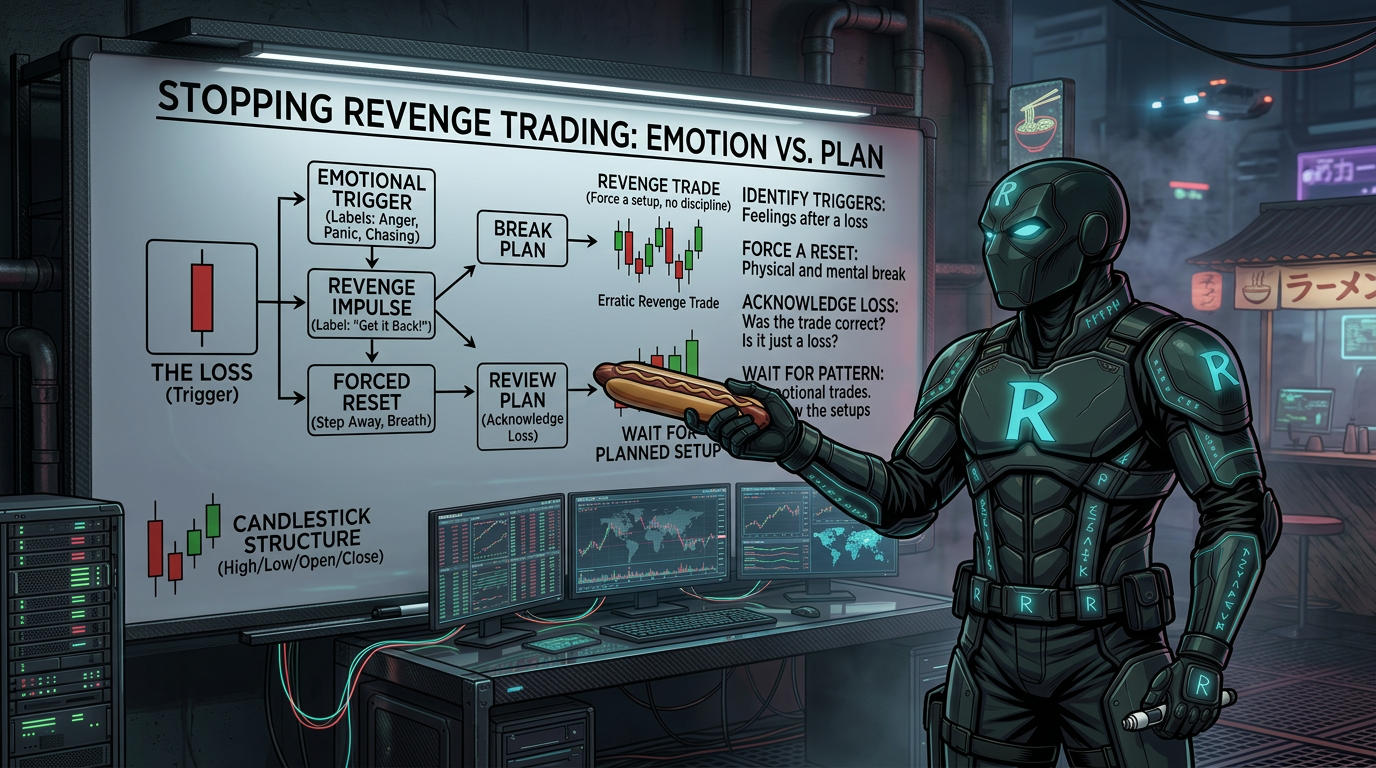
Why Emotions Wreck Good Trades
Your strategy is not the problem. Many traders lose money with the same strategy that later makes them profitable. The real issue is emotions. When you lose money, your brain treats it like a physical threat. Adrenaline kicks in, logic shuts down, and survival mode takes over. That is when you start making bad decisions. Your biggest losses probably did not come from bad setups. They came from good setups traded badly because you were angry, scared, or overconfident.
What Emotional Journaling Actually Does
Trade notes are helpful, but emotional journaling is more powerful. Write down what you felt before, during, and after every trade. Over time, patterns will show up. You might notice you take impulsive trades when you are angry. Or you blow up after a winning streak because you got overconfident. Or you miss good trades when you are stressed from life outside trading. Once you can name the emotion, you can start to manage it. You are not trying to remove emotions. You are trying to recognize them before they control you.
Discipline Is Not Willpower
Most traders think discipline means grinding harder. It does not. Discipline means building systems that make good decisions automatic. Successful trading is repetitive and boring. Some days you sit for six hours and take zero trades because nothing meets your rules. That is discipline, not failure. The traders who last are the ones who follow the same boring rules every single day with no exceptions. Create a simple pre-trade routine. Check market structure, key levels, and news events every morning. Do not try to change everything at once. Start with three things and build slowly.
How to Survive a Losing Streak
Losing streaks will test you in ways you cannot imagine. The danger is not the losses themselves. The danger is what you do next. When you try to make back losses fast, you take worse trades with bigger size. That is the death spiral. After blowing up multiple times, these three rules became non-negotiable. Rule one: if you lose two trades in a day, stop trading. Close the computer and walk away. Rule two: if you have three losing trades in a row, cut your position size in half for the next week. Rule three: do not check your profit and loss during the trading day. Watching your money go up and down makes you trade your emotions, not your setups.
What to Do When Your Strategy Stops Working
Every edge has an expiration date. Markets change, volatility shifts, and what worked before may stop working. The trap is holding on too long because you have attached your identity to your strategy. Saying your strategy does not work anymore feels like admitting you were wrong. But the traders who survive long-term treat their edges like food with an expiry date. They track their stats every week. They look at win rate, average win versus average loss, and profit factor. If anything drops more than 15 percent from their baseline for two weeks in a row, they investigate. If the data says the edge is gone, they adapt.
Recovery Is a Trading Skill
Mental burnout is invisible until it is too late. You cannot see it like sore muscles. But it slowly degrades your decision-making. When you are burned out, you take bad setups, cut winners too early, and let losers run too long. The fix is not more work. It is structured recovery. After every session, take a 20 to 40 minute walk with no phone. At the end of every week, journal three things: what you learned, what you are grateful for, and what mistakes you want to improve. After every four weeks of active trading, take three to five days completely off. No charts, no social media, no Discord.
Frequently Asked Questions
What is revenge trading?
Revenge trading is when you take trades to try to win back money you just lost. Instead of following your plan, you trade based on frustration or urgency. It usually makes things worse, not better.
Why do I keep breaking my own trading rules?
Your brain reacts to financial losses the same way it reacts to physical danger. Adrenaline kicks in and logic shuts down. This makes it hard to stick to rules in the moment. Building a routine and pre-trade checklist helps make good decisions more automatic.
How do I know if I am trading emotionally?
Signs include taking trades that barely meet your criteria, increasing position size after a loss, feeling urgency to trade, or feeling angry or desperate. If you notice any of these, step away from the charts.
Does emotional journaling actually help?
Yes. Writing down what you felt before and after each trade helps you spot patterns over time. You might notice you always take bad trades when you are stressed or overconfident. Once you see the pattern, you can catch yourself before the next mistake.
How do I handle a losing streak without blowing up?
Set clear loss rules before you start trading. A good starting point is to stop trading for the day after two losses. Cut your position size in half after three losses in a row. These rules protect your account and your confidence while you reset.
What should I do when my strategy stops working?
Track your stats every week. Look at your win rate and profit factor over your last 50 trades. If your numbers are down for two weeks in a row, investigate. Do not hold on just because the strategy used to work. Be willing to adapt.
Is it okay to take a break from trading?
Yes. Taking breaks is not laziness. It is maintenance. Mental fatigue causes small mistakes that add up fast. A short break every four weeks helps you come back sharper and make better decisions.
How long does it take to build trading discipline?
It varies, but most traders need months or years of consistent practice. The key is to start small. Pick one or two rules, stick to them for a week, then build from there. Trying to change everything at once usually leads to failure.