
How to Know When to Take a Trade (And Which Strategy Actually Works)
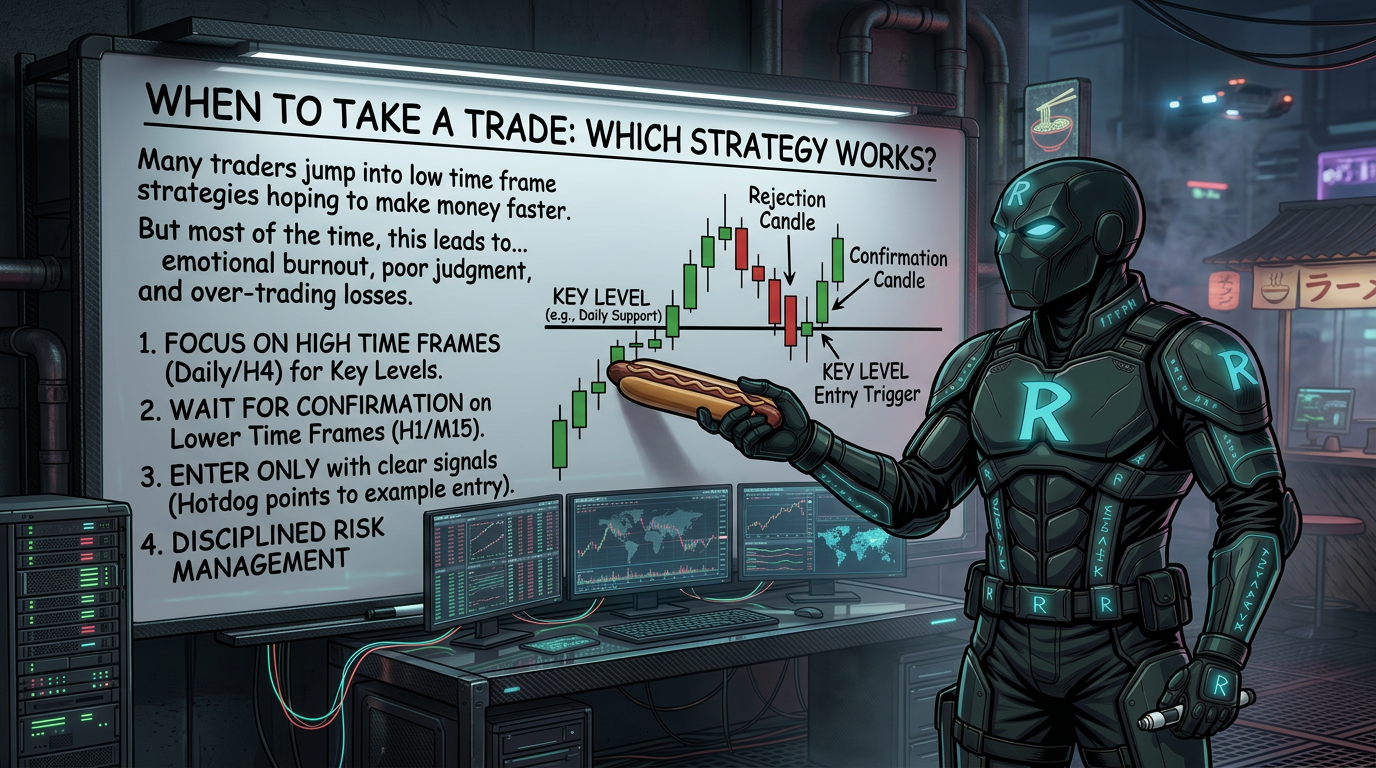
Why Most Trading Strategies Fail
Most traders pick a strategy based on one question: how can I make the most money possible? They do not think about how the strategy fits into their daily life. They do not think about how long they can keep it up. They do not think about what happens when they try to grow their account size. This narrow thinking is one of the biggest reasons most traders fail. A strategy that works for three months but burns you out is not a good strategy.
The Problem With Low Time Frame Trading
Many traders are drawn to low time frames like the 1-minute or 5-minute chart. The thinking is simple: more trades equals more money. But this is usually not true. Low time frame trading often means very tight stop losses, sometimes just 2 to 10 pips. There is almost no room for error. You have to watch the charts constantly. Most traders who try this style burn out within 6 to 12 months. A small number of traders can do it well, but they are the exception, not the rule.
Sustainability: Can You Trade This Long Term?
A sustainable strategy is one you can trade while living a normal life. You should be able to sleep 6 to 8 hours. You should be able to go to work, spend time with family, go to the gym, and pursue hobbies. If your trading strategy requires you to be glued to the screen all day, it will eventually take over your life. Trading should give you freedom, not become a new boss that controls you.
Scalability: Can You Grow With This Strategy?
Scalability means being able to trade the same strategy with more money over time. If your stop loss is just 2 pips, trading with 10 times more capital will feel extremely stressful. The emotional pressure alone can ruin your performance. A scalable strategy has wider stops, more room between your entry and stop loss, and does not require you to watch every tick. This kind of strategy lets you grow without falling apart mentally.
What a Good Foundation Strategy Looks Like
A solid foundational strategy is mechanical and set-and-forget. You look for a setup, place your trade with a proper stop loss, and walk away. You are not watching every candle. The strategy uses higher time frames, like the 1-hour chart or above, and looks for pullbacks into areas of support and resistance. This gives you a higher win rate and more confidence. It also gives you more room between your entry and stop, which means you can survive normal market movement.
The Role of Risk Management and Psychology
Once you have a solid strategy, the next job is risk management. This means keeping your risk per trade consistent, not emotional. It means having a drawdown protocol so you reduce your risk size when you are in a losing streak. It also means managing the emotional pull of greed and fear. A good strategy makes this easier because you are not gambling on tiny moves. You are placing calculated trades with clear logic behind them. Your psychology and your strategy work together.
How to Layer in Active Trading Later
If you love the excitement of day trading or scalping, you do not have to give it up completely. The idea is to build your foundational strategy first. Get that working. Get it profitable. Make it a habit. Then, if you want to, you can do more active trading on the side with a smaller account. This way you always have a stable base producing results, and your more active trading is just extra. You are not dependent on it.
The First 12 Months: What to Expect
The first year of trading is mostly about learning. You are figuring out the technical side, testing your strategy, and building your mindset. It is realistic to not make money in your first 12 months. That does not mean you are failing. It means you are investing in a skill that can pay you well for years to come. The goal in year one is to build good habits and a strategy that works, so that in year four or five, you can trade bigger capital and be rewarded for all that early work.
Frequently Asked Questions
Why do most traders fail with low time frame strategies?
Low time frame strategies require you to watch the charts constantly and use very tight stop losses. This leads to stress and burnout. Most traders cannot keep it up long term, which is why so many end up losing money.
What time frame should beginners trade on?
Most beginners do better starting on the 1-hour chart or higher. Higher time frames give you more room in your trades and do not require you to stare at the screen all day.
How do I know if my strategy is sustainable?
Ask yourself if you can trade this strategy while also sleeping, working a job, spending time with family, and taking care of your health. If trading takes over your entire day, it is probably not sustainable.
What does a scalable trading strategy mean?
A scalable strategy is one you can use with larger amounts of money without it falling apart. If your stop loss is only 2 pips, trading 10 times more capital would be extremely stressful. A scalable strategy has wider stops and does not require perfect precision.
Is it okay to not make money in my first year of trading?
Yes. The first 12 months are about learning the skill. Most traders who try to make money immediately end up taking too much risk and blowing their accounts. Focus on learning one solid strategy instead.
Can I still day trade or scalp if I enjoy it?
Yes, but build a solid foundational strategy first. Once you have a consistent base strategy that works, you can add more active trading on the side with a smaller account.
How does my trading strategy affect my mindset?
A bad strategy fires up emotions like fear and greed because every trade feels like a gamble. A good strategy with logical entries and proper stops gives you more confidence and helps you stay calm and follow your rules.
What is a set-and-forget trading strategy?
A set-and-forget strategy means you find a setup, place your trade with a stop loss and take profit, and then walk away. You do not need to manage the trade every minute. This style works well for people who have jobs or other responsibilities.