
Why You Keep Losing Money Day Trading (And How to Fix It)
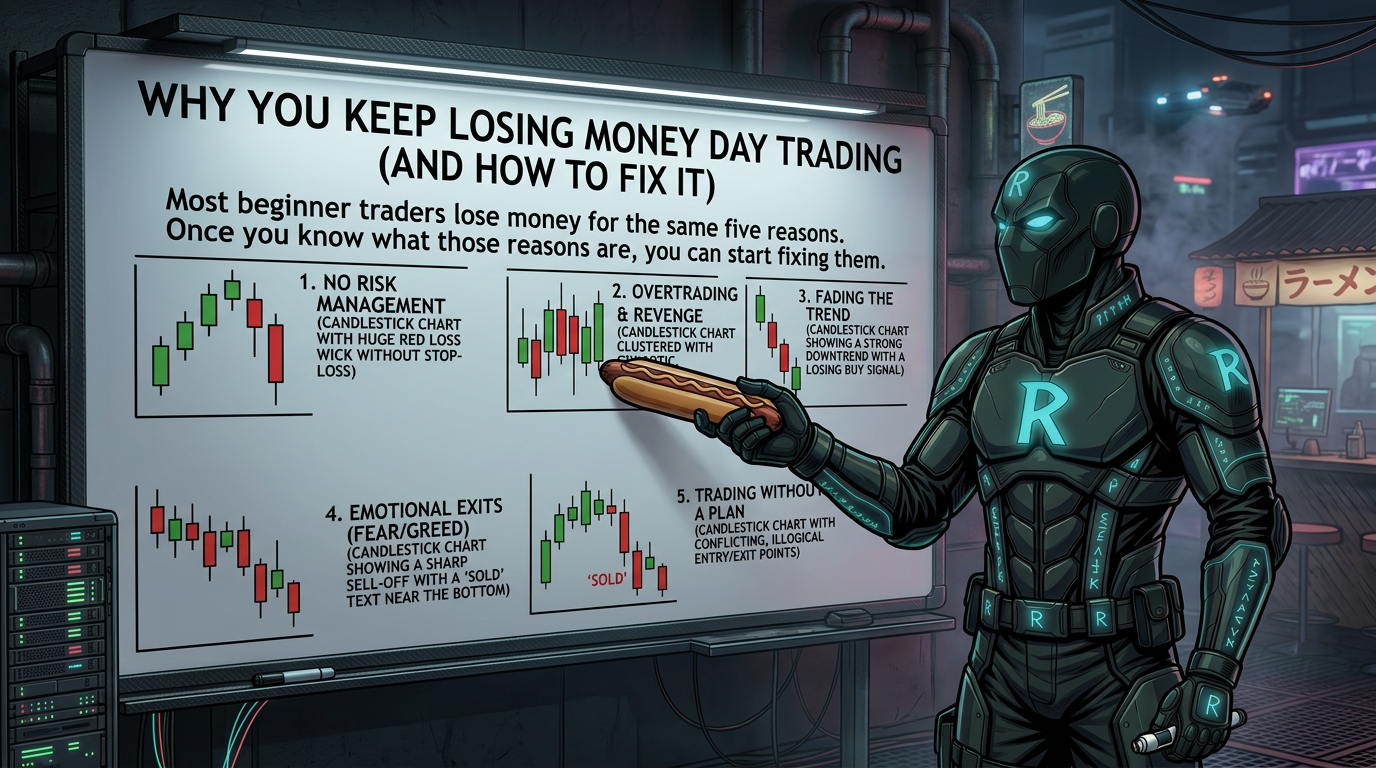
Reason 1: You Have No Strategy
A strategy is a set of rules you follow every time you trade. Without one, you are just guessing. Many beginners jump in because a friend told them about a stock or they saw something on social media. They might even get lucky at first. But early luck is dangerous. It makes you think you know what you are doing when you do not. Without a real strategy, your results will always be inconsistent.
Reason 2: You Never Practiced Before Using Real Money
Back testing means testing your strategy against past price data to see if it would have worked. Sim trading means practicing with fake money in a real market environment. If you cannot make money in a simulator, you are not ready for real money. Brokers do not care if you are ready. They make money when you trade, so they want you trading today. Do not let that pressure rush you into losses.
Reason 3: You Cannot Follow Your Own Rules
Having a strategy means nothing if you do not follow it. Even experienced traders break their own rules sometimes. When that happens, losses follow. The strategy is not the problem. The trader ignoring the strategy is the problem. You might get stubborn, frustrated, or overconfident. All of those emotions lead to rule-breaking, and rule-breaking leads to losses.
Reason 4: Losses Make You Emotional
Losing money feels bad. That is normal. But when you react emotionally to a loss, you often try to win it back fast by taking more trades. More trades without a good setup means more losses. This is called the revenge trading spiral. It can wipe out your entire account in hours. Building emotional strength is like building muscle. It takes time and repetition. You have to train yourself to accept small losses and move on.
Reason 5: You Lack Self-Confidence
Confidence without skill is dangerous. But no confidence at all is also a problem. Real confidence comes from having a strategy, testing it, and proving it works. As you build a track record of small wins, your confidence grows naturally. That confidence helps you follow your rules more easily, which leads to more wins, which builds even more confidence. This is the positive feedback loop you want to be on.
How to Pick Stocks Worth Trading
Not every stock is worth trading. For small accounts, you need stocks that move a lot. Look for stocks that meet all five of these criteria: up more than 10 percent on the day, trading on five times its normal volume, has a news catalyst driving the move, priced between two and twenty dollars, and has fewer than ten million shares available to trade. Stocks that meet all five criteria create the kind of price swings that give small accounts a real chance to profit.
The Basic Trade Strategy: Buy the Pullback
Once you find a strong stock, the strategy is simple. Wait for the stock to pull back after a move up, then buy when it starts moving up again. Strong stocks tend to move in waves: up, small dip, up again, small dip, up again. Your entry is when a new candle breaks above the high of the last red candle. Your max loss is the low of that pullback. This keeps your risk defined on every single trade.
Risk Management Rules That Protect Your Account
Before you trade each day, decide the most you are willing to lose. That is your daily max loss. Then figure out a share size small enough that even a few losses will not hit that limit. Start every day with smaller position sizes. Only increase your size after you have built a cushion of profit. If you give back half of your daily gains at any point, stop trading for the day. Green days, even small ones, build confidence. Protect them. If a voice in your head says you should stop, listen to it.
Frequently Asked Questions
Do I really need to sim trade before using real money?
Yes. If you cannot make consistent profits in a simulator, putting real money on the line will only speed up your losses. Sim trading lets you practice your strategy without financial risk. Treat it seriously and only move to real money once you have a real track record.
What is the pattern day trader rule and does it affect me?
The pattern day trader rule requires you to have at least $25,000 in your account if you want to make more than three day trades in a five-day period. If your account is smaller, you are limited in how often you can trade. This is why managing each trade carefully matters so much.
What does it mean to buy the pullback?
After a stock moves up sharply, it often dips slightly before moving higher again. Buying the pullback means waiting for that small dip and then buying when the stock starts moving up again. This gives you a clear entry point and a defined place to cut your loss if it does not work.
How do I stop revenge trading after a loss?
Set a hard daily max loss before you start trading. When you hit that number, close your platform and step away. Do not watch the market after you stop. The urge to win back losses fades when you are not staring at the screen.
Why does float matter when picking a stock?
Float is the number of shares available to trade. A stock with a small float and high demand means there are not enough shares to go around. That imbalance can cause the price to move up quickly and sharply, which creates the kind of opportunity small accounts can profit from.
How do I build confidence as a beginner trader?
Confidence comes from results, not from feelings. Start with small position sizes and focus on making small consistent profits. Each green day, even a tiny one, proves your strategy works. That proof builds real confidence over time.
Should I trade the same stock every day?
Trading one stock every day only works if you have a large account, because most stable stocks only move a small percentage each day. Beginners with smaller accounts need to find stocks that are moving a lot that day. Use a scanner each morning to find the best opportunity instead of forcing trades on a single stock.
How do I know when to stop trading for the day?
Stop trading when you hit your daily max loss. Also stop if you give back half of the profit you built up that day. And if a gut feeling tells you something is off, trust it and walk away. Protecting a small green day is more valuable than chasing a bigger one.