
Why You Keep Getting Stopped Out Early
What a High-Quality Setup Actually Needs
Before you enter any trade, you need a few things to line up. First, find a draw on liquidity on a higher time frame — this is where price is actually trying to go on the bigger picture. Second, find a draw on liquidity on a lower time frame that points in the same direction. Price is fractal, meaning the same patterns repeat across all time frames. Third, align time with price. Just because you see a draw on liquidity does not mean the market is going there right now. Certain times of day — like the 10 a.m. reversal or the 9:50 macro — are when moves are more likely to happen. Fourth, look for manipulation. This is a false push in one direction before price reverses. Fifth, wait for displacement — a strong move that breaks structure and shows real intent.
The Real Reason You Get Stopped Out
The most common reason traders get stopped out early is zooming in too much. You see what looks like a reversal on a one-minute or two-minute chart and enter. But when you zoom out, nothing meaningful has happened yet. The displacement you saw on the low time frame does not connect to any real structure on the higher time frame. For example, you might see price sweep a high and then move lower and think it is a short. But on a bigger time frame, price is sitting inside a bullish imbalance — an area where buyers are likely to step in. The short setup looked good in isolation, but the bigger picture said the opposite.
Do Not Enter on the First Manipulation Move
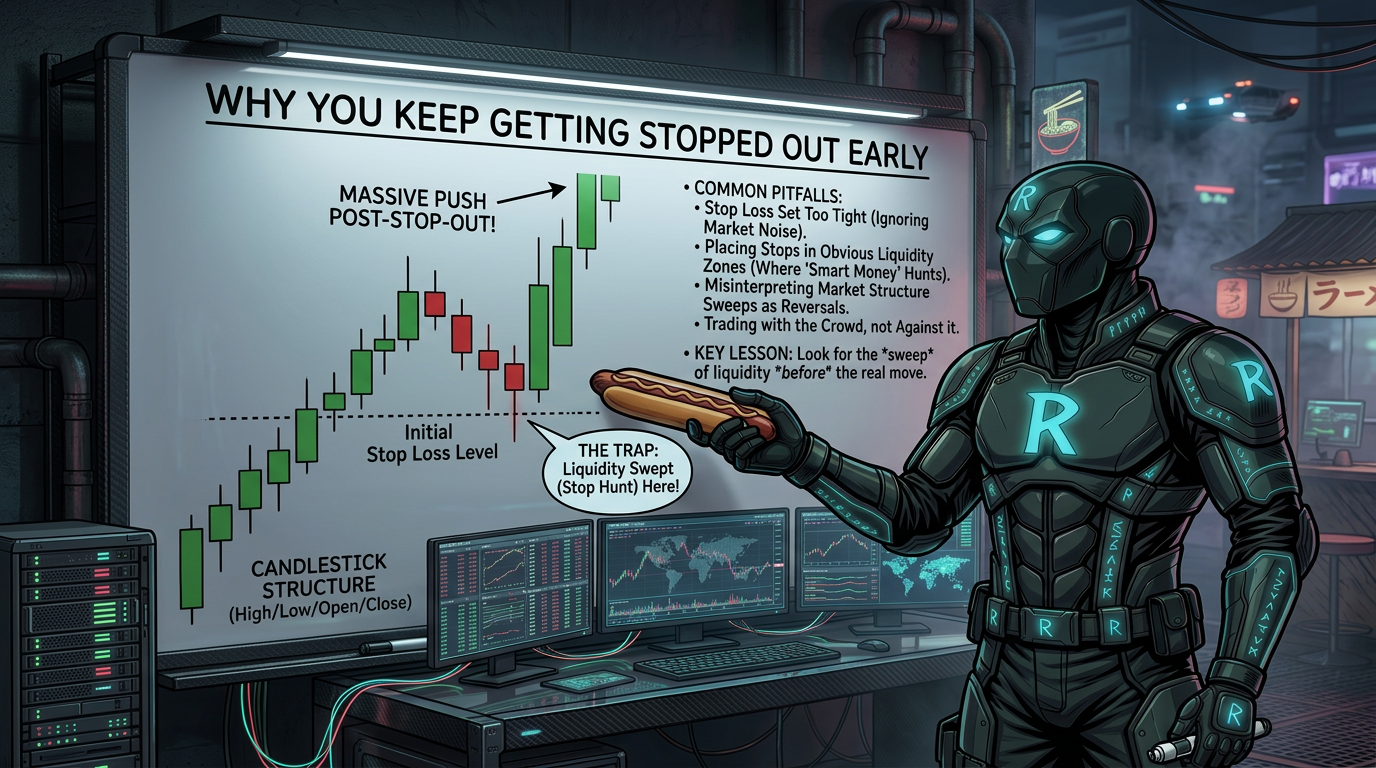
When buy side or sell side liquidity gets swept, many traders jump in right away. This is the trap. The initial move after a sweep is usually just the start of manipulation — not the real reversal. Price will often stop out early shorts or longs, build structure, and then displace in the real direction. The low that forms right after a buy side sweep often becomes the key level. Later, price comes back to that level as a breaker or fair value gap, and that is when the real entry happens. If you enter too early without displacement through a swing point, you are guessing, not trading.
How Fractal Price Helps You Find Better Entries
Price repeats the same pattern at every time frame. This is what fractal means. Once you understand this, you can zoom in on a setup and find a smaller version of the same model inside it. For example, if you have a 4-hour bearish setup with a breaker and a fair value gap, zoom in to a 15-minute or 5-minute chart. Look for the same thing — manipulation, displacement, and an entry model — but on that smaller scale. This gives you a tighter stop, a better entry price, and more confidence. You are not just trading a pattern. You are trading a pattern that connects all the way back to the bigger time frame reason for the move.
Using Time to Filter Out Bad Trades
Time of day matters a lot. The market has specific windows where reversals are more likely. The 9:50 macro and the 10 a.m. open are two key times. If price sweeps a low at 9:30 and you are sitting inside a bigger time frame imbalance, the 10 a.m. window might be the point where manipulation completes and price reverses. Aligning your entry with these time windows adds another layer of confirmation. If your setup is forming at a random time with no time-based reason for a reversal, you have lower confidence in the move.
Patterns Without Context Will Get You Stopped Out
A breaker block, a fair value gap, or a liquidity sweep does not mean anything on its own. These patterns only matter when they connect to a bigger reason for price to move. A breaker means more when there is buy side liquidity above it and manipulation has already happened. A fair value gap means more when it sits inside a bigger time frame imbalance. If you are just trading the pattern without asking why price should move from here, you are going to get stopped out often. Context is what separates high-quality setups from average ones.