
Opening Range Breakout: A Simple Futures Trading Strategy
What Is the Opening Range?
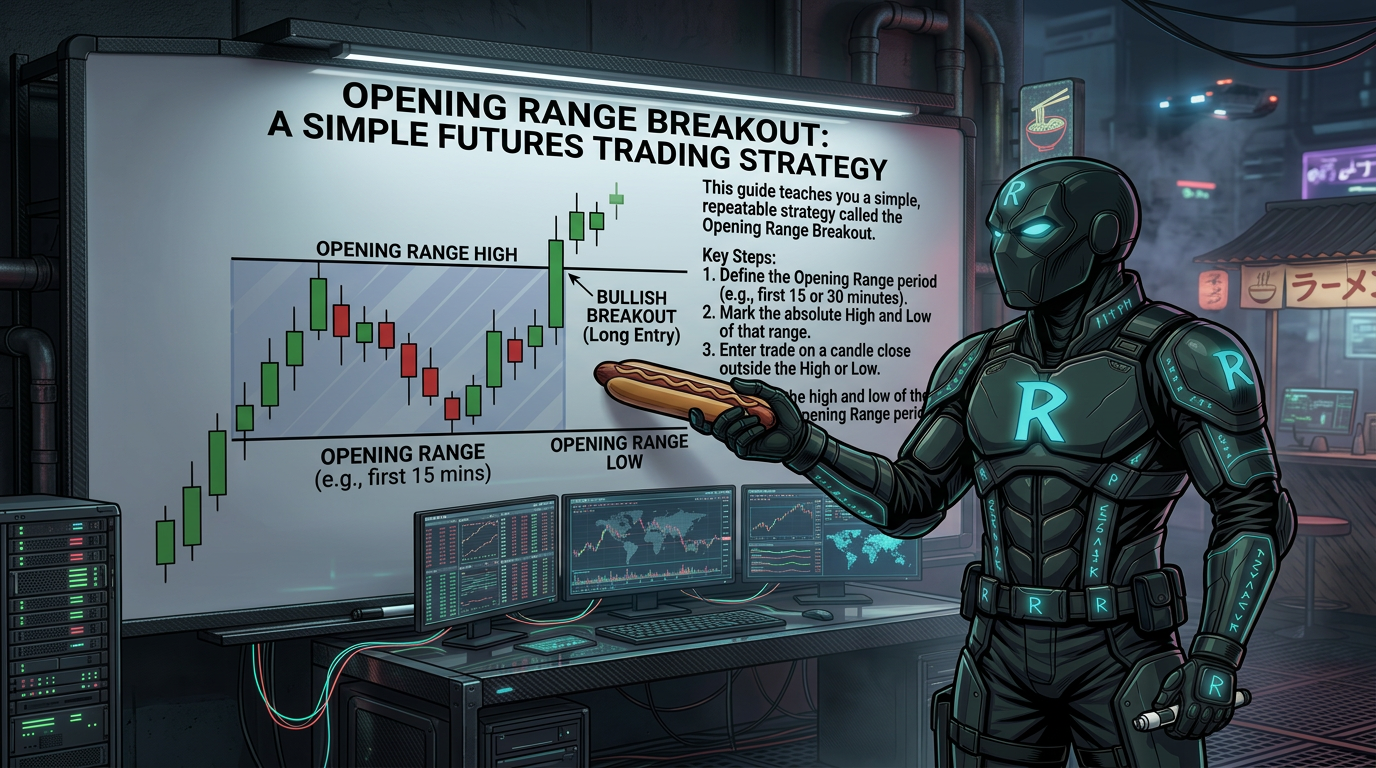
Every trading session starts with a first candle. That candle has a high and a low. Together, those two levels form what is called the opening range. The opening range matters because a lot of buying and selling happens around those levels. Traders watch these levels closely, which creates liquidity. Liquidity means there are enough buyers and sellers to move price in a clear direction. The opening range gives you two simple lines to trade around every single day.
Which Session Should You Trade?
There are three main trading sessions: New York, London, and Asia. The New York session opens at 9:30 a.m. Eastern Time. This is the best session to trade because it has the most volume and volatility. More volume means bigger, cleaner moves. London and Asia sessions can also work, but the New York open is the most reliable for this strategy. Start there until you are comfortable.
Step 1 — Mark the 15-Minute Opening Range
Switch your chart to the 15-minute time frame. Wait for the first full candle to close after 9:30 a.m. Eastern Time. That candle will close at 9:45 a.m. Draw a horizontal line at the high of that candle and another line at the low of that candle. These are your two key levels for the day. The 15-minute range is recommended for beginners because it has the most liquidity and combines well with lower time frames.
Step 2 — Wait for a 5-Minute Candle Close Beyond the Range
Switch to the 5-minute chart. Do not enter a trade yet. You are waiting for a full 5-minute candle to close above the opening range high or below the opening range low. A close above the high signals potential bullish continuation. A close below the low signals potential bearish continuation. Waiting for the candle to fully close is important. A wick that pokes through does not count. You need a full candle body close on the other side.
Step 3 — Enter on the 1-Minute Chart
Once you see the 5-minute candle close beyond the range, switch to the 1-minute chart. Now you are looking for a specific entry. There are three entry types you can use. First is the breakout entry — you enter as soon as the 5-minute candle confirms the break, ideally when you see a bullish or bearish gap on the 1-minute chart. Second is the retest entry — you wait for price to come back and retest the opening range level, then enter when buyers or sellers step in. This is the most common and preferred entry. Third is the reversal setup — if the break fails and price comes back inside the range, you can trade in the opposite direction. This works best on range-bound days.
Entries, Stops, and Targets
Your stop loss goes just below the low of the breakout candle for longs, or just above the high for shorts. For the retest entry, your stop goes below the swing low. Your profit target should be at least twice your stop distance. This is called a 1-to-2 risk-reward ratio. For example, if your stop is 50 cents away, your target should be at least one dollar away. This means you only need to be right half the time to make money over many trades.
Real Trade Examples
In a Tesla example, the first 15-minute candle was marked. The 5-minute chart showed a strong candle close above the range high with a bullish gap on the 1-minute chart. A breakout entry was taken with a stop below the gap candle. Price continued higher and hit the target. In an Nvidia example, the range broke to the upside on the 5-minute chart, but there was no gap. A retest entry was used instead. Price came back to the range level and buyers stepped in, pushing price to new highs. In a QQQ example, the market was ranging with no clear trend. Price broke down but reversed quickly. A reversal setup was used after a break of structure, entering long off an order block with a stop below the level. Price eventually reached the high of day.
When Not to Trade This Strategy
Not every day will give you a clean setup. If price keeps moving back and forth inside the opening range, it is likely a range day. On range days, continuation setups often fail. Look for the reversal setup instead, or sit on your hands. Trading indices like QQQ or SPY tends to produce more range days than individual stocks. If you mainly trade indices, you will need to use the reversal setup more often.
Frequently Asked Questions
What time does the New York session open?
The New York session opens at 9:30 a.m. Eastern Time. The first 15-minute candle closes at 9:45 a.m. That is when you draw your opening range levels.
Do I need special indicators for this strategy?
No. This strategy only requires you to draw two horizontal lines — one at the opening range high and one at the opening range low. No indicators are needed.
What time frame should beginners use?
Beginners should start with the 15-minute opening range. It has the most liquidity and works well with the 5-minute and 1-minute charts for entries.
What is the difference between a breakout entry and a retest entry?
A breakout entry means you enter right when the 5-minute candle closes beyond the range. A retest entry means you wait for price to come back to the range level after the break and then enter when buyers or sellers react. The retest entry is considered lower risk.
Where should I put my stop loss?
For a long trade, put your stop just below the swing low or below the gap candle that confirmed the breakout. For a short trade, put it just above the swing high. Always know your stop before you enter.
What is a good profit target for this strategy?
Aim for at least a 1-to-2 risk-reward ratio. That means your target should be at least twice as far as your stop loss. For example, if your stop is 50 points away, your target should be 100 points away.
Can I use this strategy on forex or stocks, not just futures?
Yes. This strategy works on stocks, futures, and forex. The same three steps apply. Just make sure you are trading during the New York session for the best results.
What should I do if the opening range does not break cleanly?
If price moves back and forth inside the range without a clear break, it is likely a range day. On those days, skip the continuation setup and either look for a reversal at the range edges or do not trade at all.