
How to Know Which Direction to Trade Today
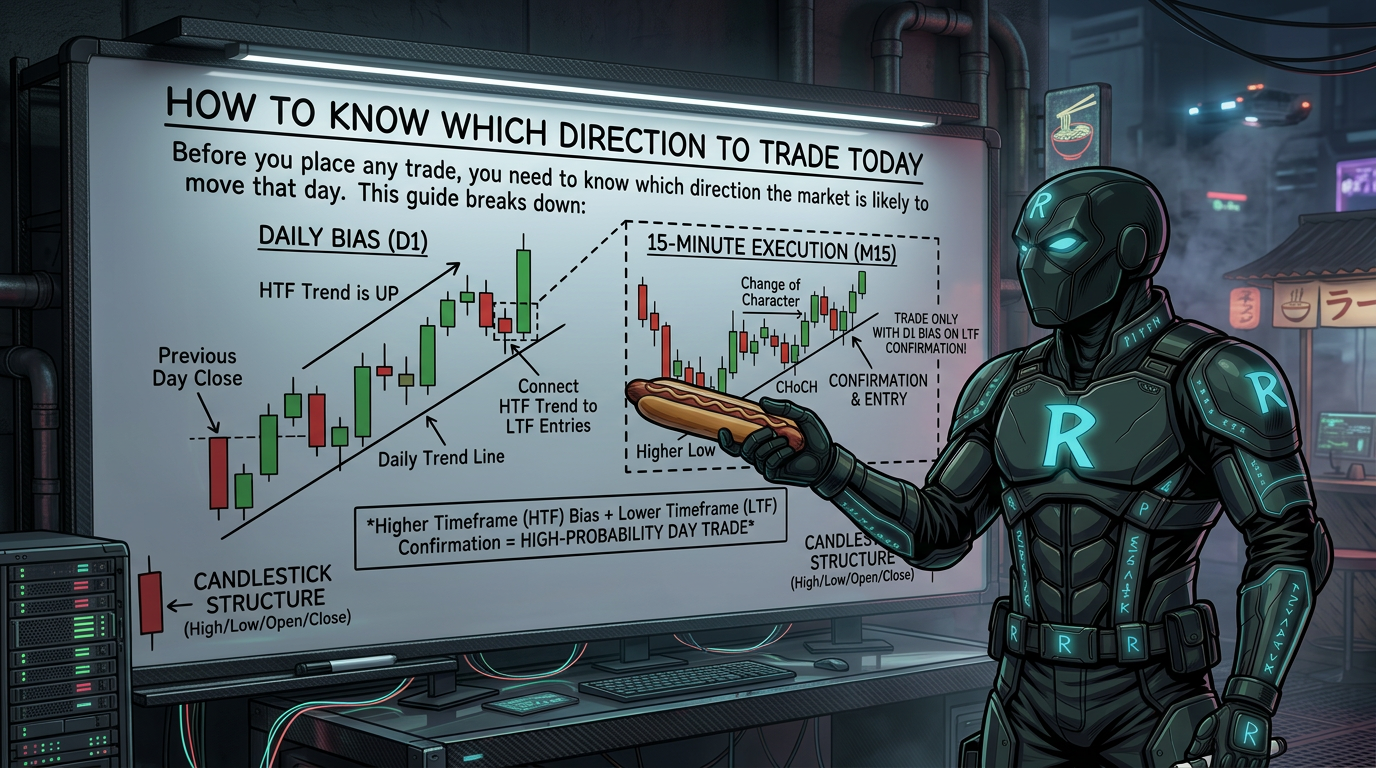
What Is Daily Bias and Why Does It Matter
Daily bias means deciding if the market is more likely to go up or down today. Without a bias, you end up taking random trades and losing money. Think of bias as your compass before you start walking. Entry setups are easy to find. The hard part is knowing which ones to take. A clear bias tells you which setups to act on and which ones to ignore. Most traders fail because they jump straight to trade setups without first checking the big-picture direction.
Step 2 — Use Power of Three to Plan the Day
Power of Three describes how a daily candle moves in three phases. The three phases are accumulation, manipulation, and distribution. On a bearish day the candle opens, pushes up briefly to trap buyers, then falls and closes near the low. On a bullish day the candle opens, pushes down briefly to trap sellers, then rises and closes near the high. This matters because it tells you what price should do before it moves in your direction. If you are bullish, you expect price to dip below the midnight open first. That dip is the manipulation phase. It shakes out weak traders and gives you a better entry price. Use midnight as your starting point for the daily open. Watch whether price trades above or below that open early in the session.
Why Timing Can Make or Break Your Trade
Having a bias is not enough on its own. You also need timing to line up. Here are some common timing mistakes. Taking a trade right before a major news event like CPI. The news can spike price in any direction and stop you out. Trying to go long when price is already trading at a previous day's high during the morning session. The move has already happened and there is nothing left for you. Shorting into a market that is already near a strong support level late in the day. Always check the economic calendar before trading. Know when big news events are scheduled. If news is due soon, wait until after the release before entering. Also pay attention to which session you are in. If the market already moved hard during the London session, the New York session trade may not set up for you that day. In that case, sit out and come back tomorrow.
Putting It All Together — Your Daily Checklist
Here is the full process in order. First, look at the daily chart and find your swing high and swing low. Draw the Fibonacci retracement and note if price is in premium or discount. That sets your high time frame bias. Second, check the Power of Three. If you are bullish, expect a dip below the midnight open. If you are bearish, expect a push above the midnight open. Third, check the economic calendar. Know if any news events could disrupt your plan. Fourth, sit down at your trading session and confirm that price behaved the way you expected. If everything lines up, look for your entry setup. If the market already ran to your target or the timing does not make sense, do not force a trade. Wait for the next day. Skipping bad days is just as important as taking good trades.
Frequently Asked Questions
What is daily bias in trading?
Daily bias is your prediction of whether the market will go up or down that day. It is based on where price sits relative to key levels on the daily chart. Having a clear bias helps you avoid random trades and focus only on high-quality setups.
What is a premium and discount zone?
A premium zone is above the 50% level of a price range. It means price is expensive. A discount zone is below the 50% level. It means price is cheap. You sell in premium and buy in discount. Use a Fibonacci retracement tool between a swing high and swing low to find these zones.
What is Power of Three?
Power of Three describes three phases in a daily candle. The market opens, makes a false move in one direction to trap traders, and then moves strongly in the real direction. On bullish days price dips first then rallies. On bearish days price pops first then falls.
What is the midnight open and why does it matter?
The midnight open is the price at which the new daily candle starts at midnight. It is used as a reference point. If you are bullish, you want price to dip below the midnight open before entering long. If you are bearish, you want price to push above the midnight open before shorting.
How do I use the economic calendar when trading?
Check the calendar before every trading session. If a high-impact event like CPI or a Fed announcement is scheduled, avoid entering trades right before it. Wait until after the news releases and price settles before looking for your setup.
What should I do if the market already moved before I sat down to trade?
Do not chase the market. If price already hit your target or ran past your expected entry level, the trade is done for that day. Close your charts and come back tomorrow. Sitting out a bad day protects your account just as much as taking a good trade.
Can I use this system on any market?
Yes. This system works on any liquid market including NASDAQ, S and P 500, forex pairs, and gold. The concepts of premium and discount and Power of Three apply to any market that has a daily open, high, low, and close.
Why is my bias right but my trades still lose money?
Timing is probably off. You can have the correct directional bias but still lose if you enter at the wrong time. Common timing mistakes include trading right before news, entering after the market already moved far in your direction, or trading outside of the session when your setup typically forms.