
Why NQ Spikes at 9:30 Then Reverses (And How to Trade It)
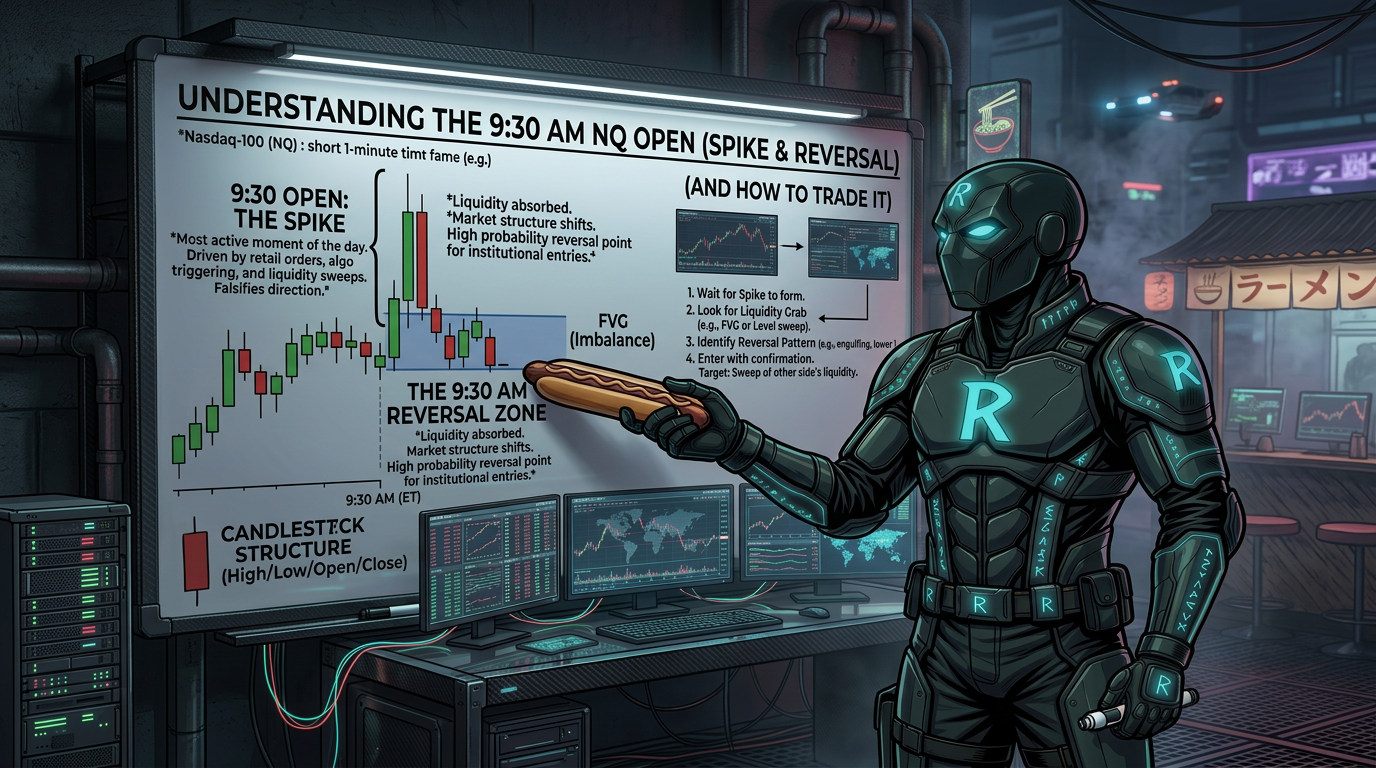
What Is the 9:30 a.m. Candle?
The 9:30 a.m. candle is the very first 5-minute candle when the New York Stock Exchange opens. This candle captures the first burst of buying and selling from traders all over the world. It often moves fast and creates a high and a low. These two price levels become the foundation of the strategy. Everything after that is just watching what price does around those two levels.
Why 90% of Traders Lose at the Open
Most traders see a big move at 9:30 and jump in right away. For example, they see price break above the 5-minute high and they buy. This feels logical. But the problem is there is no confirmation yet. The breakout is often a trap. Market makers push price past a key level to grab liquidity from traders who jump in early. Then price reverses and those traders get stopped out. This is called a false breakout or a fakeout. It happens constantly at the open because volume and volatility are at their highest.
The Simple Fix: Wait for the Retest
Instead of buying the breakout, wait for price to come back and retest the level it just broke. Here is how it works step by step. First, mark the high and low of the 9:30 5-minute candle. Second, watch for a 1-minute candle to fully close above the high or below the low. The candle body must close past the level, not just wick past it. Third, wait for price to pull back and retest that same level. Fourth, look for strong price action at the retest. A small lower wick on a bullish retest or a small upper wick on a bearish retest shows buyers or sellers are stepping in. Only then do you enter the trade.
Where to Set Your Stop Loss and Profit Target
Your stop loss should go just below the retest candle for a long trade or just above it for a short trade. If price breaks back through the level you were retesting, the setup is invalid and you exit. For profit targets, aim for at least a 2-to-1 risk-to-reward ratio. That means if you risk $100, you target $200 in profit. In some cases the setup offers 3-to-1 or even higher. Whole number price levels like 190, 482, or 192 work well as profit targets because they are common areas where price reacts.
What the 1,000 Trade Backtest Showed
A backtest compared two versions of this strategy over more than 1,000 trades. The old version, which just buys or sells the breakout with no retest, produced 319 winners and 704 losers. The profit factor was 0.6, meaning traders lost money overall. The refined version, which requires the retest and confirmation, produced 773 winners and 533 losers with a profit factor of 4.15. That is a massive difference. The only change was adding the retest rule and waiting for strong price action. Patience alone turned a losing strategy into a winning one.
How to Avoid the Trap in Real Time
When you watch the open, it can feel urgent. Price moves fast and you feel like you are missing out. That feeling is exactly what causes traders to chase and lose. The fakeout move that happens first is designed to grab impatient traders. After the fakeout, price often reverses and sets up the real move. The retest is your signal that the reversal from the fakeout is over and the real direction is starting. Stay calm, let the fakeout happen, and wait for the retest. The best trades feel boring to enter because they are slow and controlled.
Frequently Asked Questions
Why does NQ spike right at 9:30 and then reverse?
The spike happens because a huge number of orders hit the market all at once. Price pushes past key levels to grab the stops and orders sitting there. Once that liquidity is taken, there are no more buyers or sellers to keep the move going, so price snaps back. This is called a liquidity sweep or fakeout.
What is the 9:30 a.m. candle strategy?
It is a method where you mark the high and low of the first 5-minute candle at the market open. Then you wait for a confirmed break of one of those levels, followed by a pullback retest, and only enter the trade when strong price action confirms buyers or sellers are stepping in.
Why should I not just buy the breakout?
Buying the breakout without confirmation leads to losses most of the time. A 1,000-trade backtest showed that buying breakouts blindly results in a 0.6 profit factor, which means you lose money overall. Most breakouts at the open are fakeouts designed to trap early traders.
What does a retest look like?
After price breaks above the 9:30 high or below the 9:30 low and a candle body closes past that level, price pulls back to touch that same level again. If you see a small wick rejection at that level, that is a retest with strong price action. That is your entry signal.
Where do I put my stop loss?
Place your stop loss just below the candle that retested the level on a long trade, or just above it on a short trade. If price closes back through the level you are trading from, the setup has failed and you exit.
How much profit should I target?
Target at least 2 times what you are risking. If your stop loss risk is $100, your target should be at least $200. This is called a 2-to-1 risk-to-reward ratio. Some setups offer 3-to-1 or more, which makes them even better.
Does this strategy work on stocks other than NQ futures?
Yes. The examples in the video use Nvidia and other stocks. The logic applies to any liquid instrument that has active trading at the 9:30 a.m. open. The key is that the market must have enough volume and volatility to create a real opening range.
How long does it take to trade this strategy each day?
The creator of this strategy says he only trades for about 90 minutes each morning. The setup either develops in the first 30 to 60 minutes after the open or it does not happen that day. You do not need to sit at your screen all day to use this approach.