
How to Recover from a Trading Loss (Without Losing Your Mind)
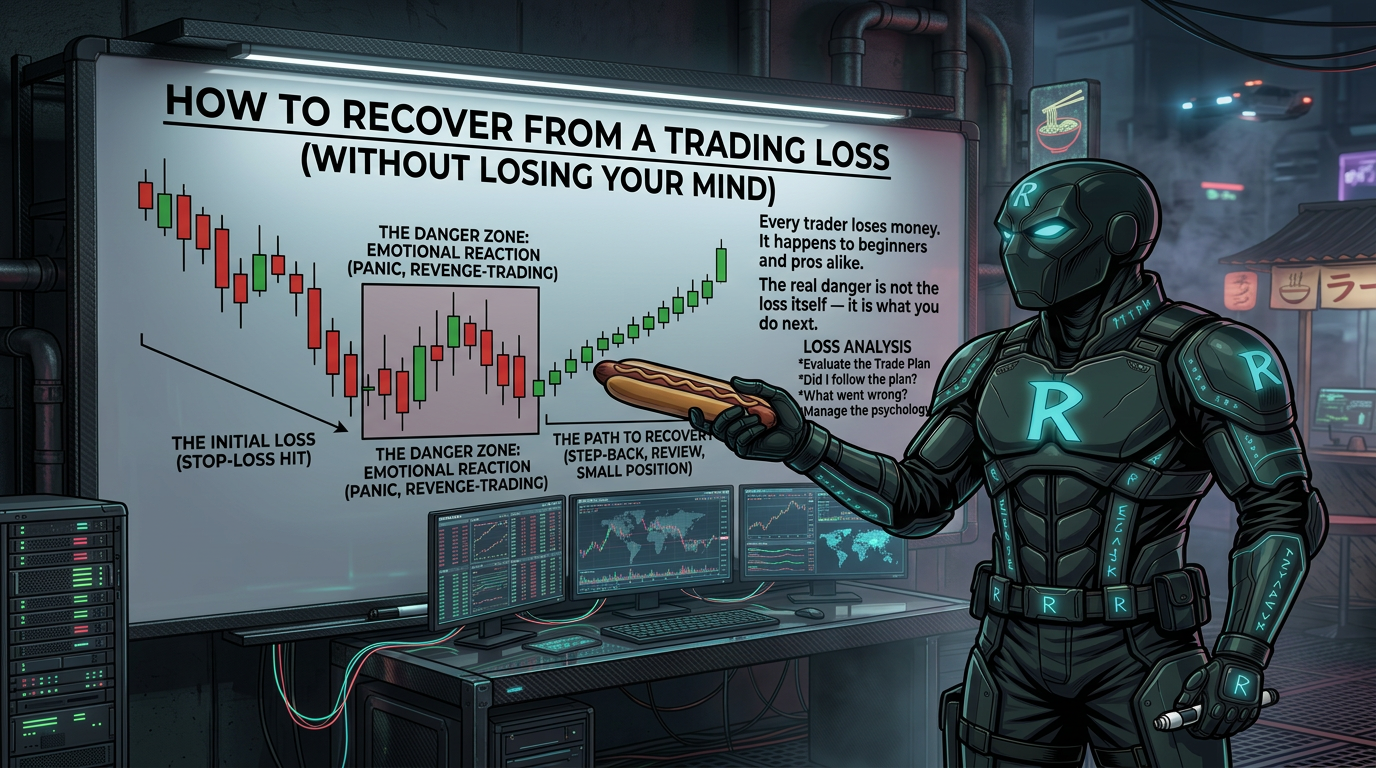
Step 1: Size Down After a Big Loss
After a bad loss, your first instinct may be to trade bigger to win it back fast. Do not do this. Trading bigger while you are upset is called trading on tilt. It almost always leads to even larger losses. Instead, cut your position size way down the next day. Focus on making small, clean trades — think base hits, not home runs. You need to rebuild your confidence before you earn back the right to trade full size.
Step 2: Take a Real Break
Your brain needs time to reset after losing money. Taking a break is not weakness — it is smart. Many professional traders take weeks off during slow market seasons like summer or the holidays. Even one or two days away from the charts can help you come back calmer and more focused. You cannot trade well when you are mentally exhausted or emotionally raw.
Step 3: Stop Comparing Yourself to Other Traders
Seeing another trader post a huge win can make your own results feel worthless. But their wins are based on their account size and their risk tolerance — not yours. If you try to match their size overnight, you are setting yourself up for losses you are not ready to handle. A consistent $100 or $500 day is a real win depending on your account. Focus on your own progress and no one else's.
Step 4: Review Your Trading Journal
When you are in a losing streak, your brain tends to forget all the times you traded well. That is where a trading journal helps. Go back and look at your past wins. Remind yourself that you have done this before. A good journal tracks not just your profit and loss, but also which strategies you used and how you felt emotionally during each trade. Patterns in your journal can reveal exactly what habits are hurting you.
Step 5: Think of Losses as Tuition
Nobody teaches you how to trade in school. Every loss is a lesson you paid for. If you start seeing your losses as market tuition instead of failures, you will be more likely to study them and improve. Most traders do not become consistently profitable in their first year. That is normal. The goal early on is to learn, not to earn. The traders who stick with it and keep learning are the ones who eventually make it.
Step 6: Build a Support System
Trading alone is hard. Going through losses alone is even harder. Find people who understand what trading is really like — other traders, online communities, or mentors. Having someone to celebrate wins with and talk through losses with makes a huge difference. Avoid people who dismiss your trading or add negativity when you are already struggling. Protect your mental environment as much as you protect your trading account.
Bonus Tips: Move Your Body and Eat Good Food
When nothing else seems to work, try these two simple things. First, work out. Physical activity releases tension and shifts your focus away from the loss. The pain of a tough workout can actually replace the sting of a losing trade. Second, eat something you love. Good food restores your mood and gives your body a reset. These may sound basic, but they work. Taking care of your body is part of taking care of your trading.
Frequently Asked Questions
Is it normal to lose money when you first start trading?
Yes, completely normal. Most traders are not profitable in their first year. The early phase of trading is really about learning. Losses are part of that process as long as you manage your risk and keep studying your mistakes.
What does trading on tilt mean?
Trading on tilt means making emotional, panicked trades after a loss. You throw out your rules and just try to win back money as fast as possible. This almost always makes things worse and leads to even bigger losses.
How long should I take a break after a big loss?
It depends on how bad the loss was and how you feel. A one-day break is a minimum. After a very large loss or a long losing streak, taking a full week off is a smart move. Come back only when you feel calm and mentally ready.
Why should I size down after a loss instead of trading bigger to recover faster?
When you are emotionally shaken, your judgment is off. Trading bigger in that state usually leads to more losses. Sizing down lets you trade with discipline and rebuild your confidence before risking larger amounts again.
What should I write in a trading journal?
Record each trade's ticker symbol, strategy used, profit or loss, how much risk you took, and how you felt emotionally during the trade. This helps you spot patterns — both good habits and bad ones — so you can improve over time.
How do I stop comparing my results to other traders online?
Remember that everyone's wins and losses are tied to their own account size. A $500 win for you might be the same percentage gain as a $10,000 win for someone trading a much larger account. Focus only on your own progress and goals.
What if I feel like quitting after a big loss?
That feeling is very common and does not mean you should quit. Take a break, review past wins in your journal, and talk to someone who understands trading. Most experienced traders felt the same way early on and pushed through it.
Do professional traders still have losing days?
Yes, all the time. Even traders with many years of experience have losing days, losing weeks, and sometimes losing months. The difference is they manage their risk, take breaks, and do not let one bad loss spiral into something much worse.